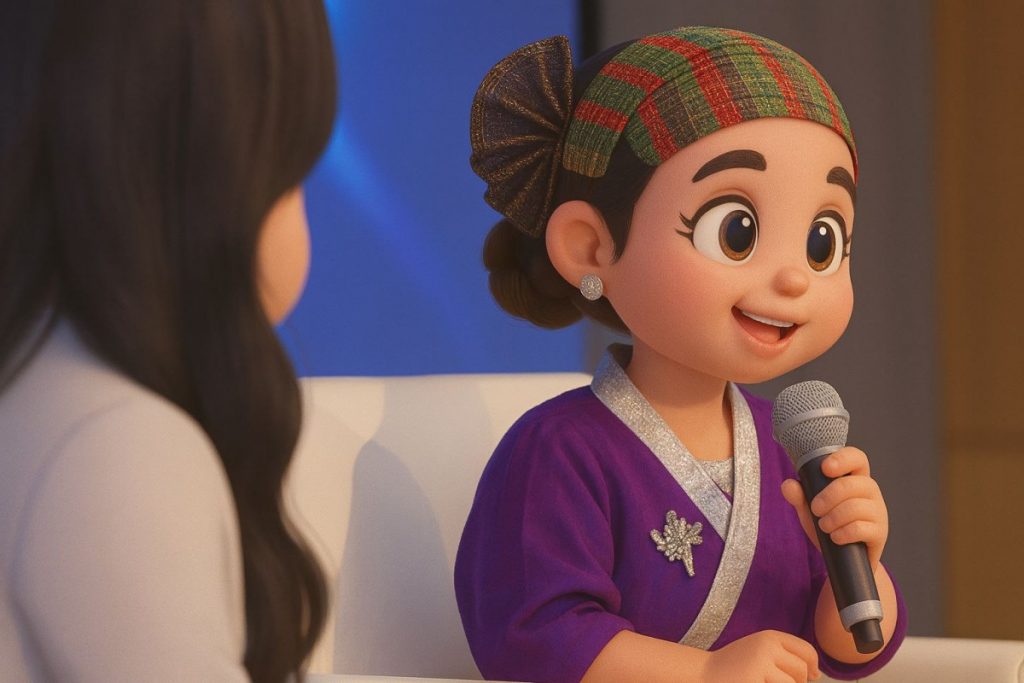
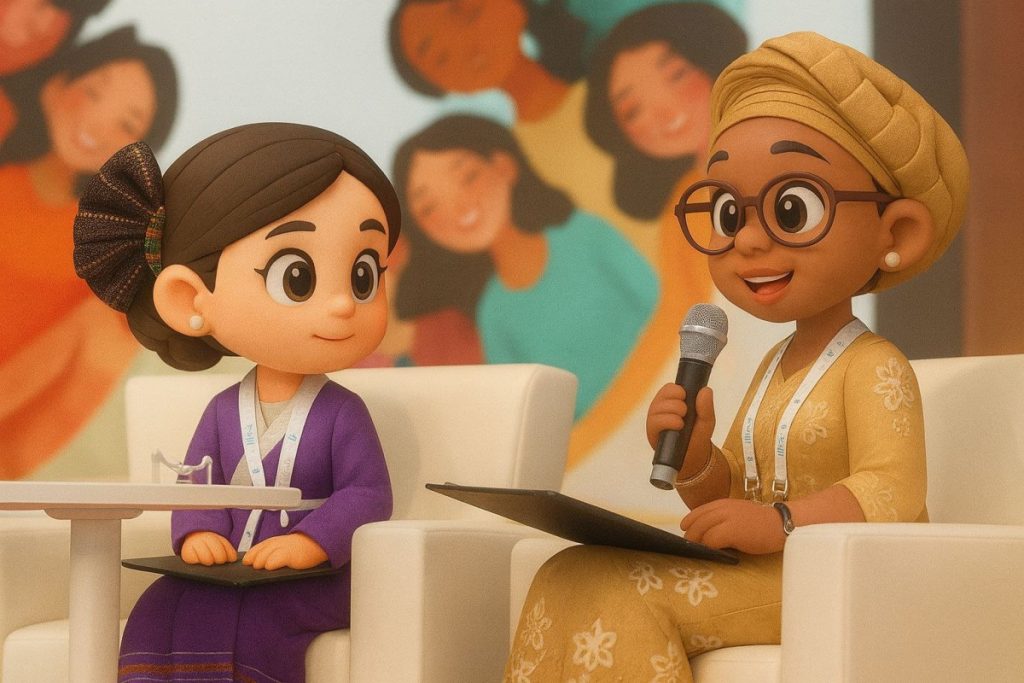
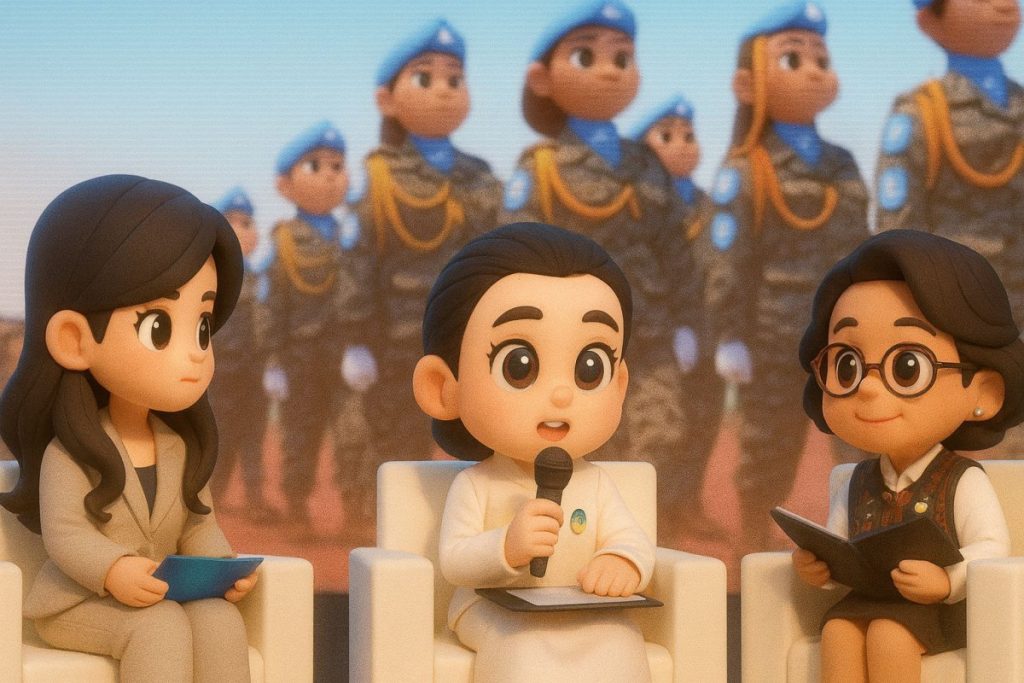
Two Community Leaders Bringing Peace to Georgia: From Personal Loss to DPCW Resolutions

  • 🌍 Seven cities and counties in Georgia have adopted resolutions based on the Declaration of Peace and Cessation of War (DPCW).
  • 🕊️ Behind these resolutions are community leaders who connected peace with local needs, youth development, and public engagement.
  • 🤝 One leader drew on personal experiences of war and loss to promote compassion, communication, and community action.
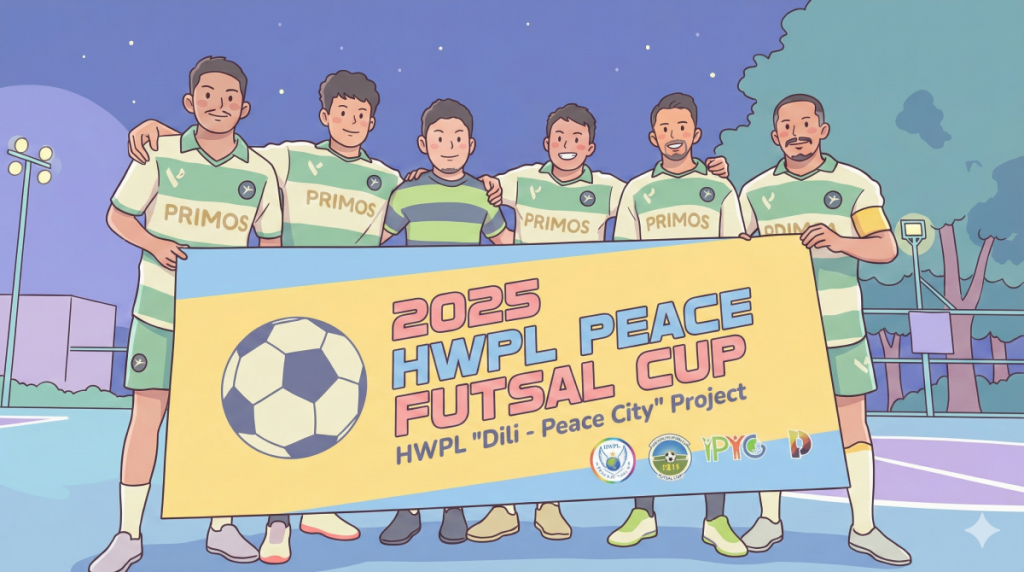
  • ⚽ Another has focused on youth leadership and partnerships, using sport as a way to teach cooperation and peace.
  • 📜 Their stories suggest that a peace resolution can be more than a symbolic declaration. It can become a framework for continued community action.
  • ❤️ From a human rights perspective, these efforts raise an important question: how can the value of peace become part of everyday community life?

1. A Personal Understanding of Violence and Community Responsibility

A STEP TOWARDS PEACE Two Community Leaders Bringing Peace to Georgia: From Personal Loss to DPCW Resolutions Youth Leadership peacebuilding Peace Resolution Peace education man hee lee true story of peace HWPL human rights Georgia Peace Georgia DPCW Community Peace

The story of peacebuilding often begins far from government offices or formal resolutions. Sometimes, it begins with personal loss.

One of the key figures behind the DPCW movement in DeKalb County serves as an administrative assistant in the county CEO’s office. Her perspective on peace was shaped by a childhood spent between different cultures and by direct encounters with the consequences of war.

Born in Paris to a Congolese mother and an American father, she spent much of her childhood in Saudi Arabia. Conflict in the Democratic Republic of the Congo was also a recurring subject in her family. The loss of relatives and family acquaintances made violence more than a distant international issue.

During the Gulf War, she was stranded in Thailand. Later, while attending an athletics event in Kuwait, she saw the destruction left by the conflict and met children whose families and homes had been affected.

These experiences influenced the way she viewed responsibility. For her, remaining silent when people are suffering is not neutral. It can allow injustice to continue.

Her understanding of violence changed again after moving to the United States. She had seen the effects of armed conflict overseas, but the prevalence of gun violence in American communities was also deeply unsettling. It strengthened her commitment to building communities where people can feel safe, respected, and connected.

Her community work has therefore extended beyond government. She has supported environmental and youth initiatives through the Fruitful Community Foundation and participated in activities associated with the Roots & Shoots program. She has also worked with local leaders, entrepreneurs, artists, and nonprofit organizations through community-focused media.

Across these different roles, she has emphasized one simple principle: real communication begins with listening.

That principle became especially significant after the killing of her younger brother in 2020. Following the loss, she made a conscious effort to become more involved in her community and to build relationships with others.

In 2023, she attended an HWPL peace walk with members of her family. The event left an impression on her, particularly the warmth with which the organizers welcomed her family.

What began as a personal connection eventually contributed to the adoption of a DPCW-based resolution in DeKalb County.

That progression is significant. A formal peace initiative did not emerge in isolation. It developed through personal experience, relationships, and an existing commitment to community well-being. 🕊️

2. From Compassion to a DPCW Peace Resolution in DeKalb County

A STEP TOWARDS PEACE Two Community Leaders Bringing Peace to Georgia: From Personal Loss to DPCW Resolutions Youth Leadership peacebuilding Peace Resolution Peace education man hee lee true story of peace HWPL human rights Georgia Peace Georgia DPCW Community Peace

The DPCW resolution in DeKalb County was rooted, in part, in a value the county was already trying to express: compassion.

The administrative assistant worked with a county commissioner to develop this value into an official resolution. The effort reflected an understanding that peace should connect with the practical concerns of local government rather than remain an abstract international ideal.

This distinction matters.

A community may formally endorse peace, but the meaning of that decision becomes clearer when it is connected to policy and public investment. At the time, DeKalb County was also addressing issues such as employee wages, policing, and education.

For the administrative assistant, these efforts provided evidence that the county was already attempting to translate compassion into action.

The DPCW resolution could therefore serve as a public expression of a broader direction within the community.

She has also argued that peace resolutions should lead to practical programs. Peace education, violence prevention, and community dialogue could give substance to the principles expressed in a resolution.

Her approach places particular importance on communication with residents.

Rather than simply making decisions on behalf of the public, she encouraged people to understand local issues and participate in the process. Regular communication, she believed, could help residents become partners in shaping their community.

This is also relevant to human rights.

A peaceful society depends not only on the absence of armed conflict. It requires people to have a sense of security, dignity, participation, and belonging.

From this perspective, local peacebuilding is closely connected to the broader idea of human rights. 🌱

A resolution can provide a starting point, but its real value depends on what follows: education, dialogue, policy, and sustained participation.

3. Youth Leadership: Building Peace Through Partnership and Sport

The second community leader approached peacebuilding through a different path: young people.

As the leader of the Arrow International Youth Leadership Council, she has worked to address challenges facing young people in Georgia, including violence, poverty, suicide, and low literacy.

Her commitment also has a personal foundation. As a teenager, she experienced the importance of having a caring mentor. One supportive adult can influence the direction of a young person’s life.

That experience shaped her belief that youth development is a shared responsibility.

Her approach is not simply to identify problems among young people. Instead, she emphasizes the role of the wider community in changing the environment around them.

Her message is captured in the phrase “One World, One Team.” 🌍

Over the years, her organization has developed partnerships with sports organizations, schools, community groups, and youth leaders. These partnerships eventually extended to local government.

A STEP TOWARDS PEACE Two Community Leaders Bringing Peace to Georgia: From Personal Loss to DPCW Resolutions Youth Leadership peacebuilding Peace Resolution Peace education man hee lee true story of peace HWPL human rights Georgia Peace Georgia DPCW Community Peace

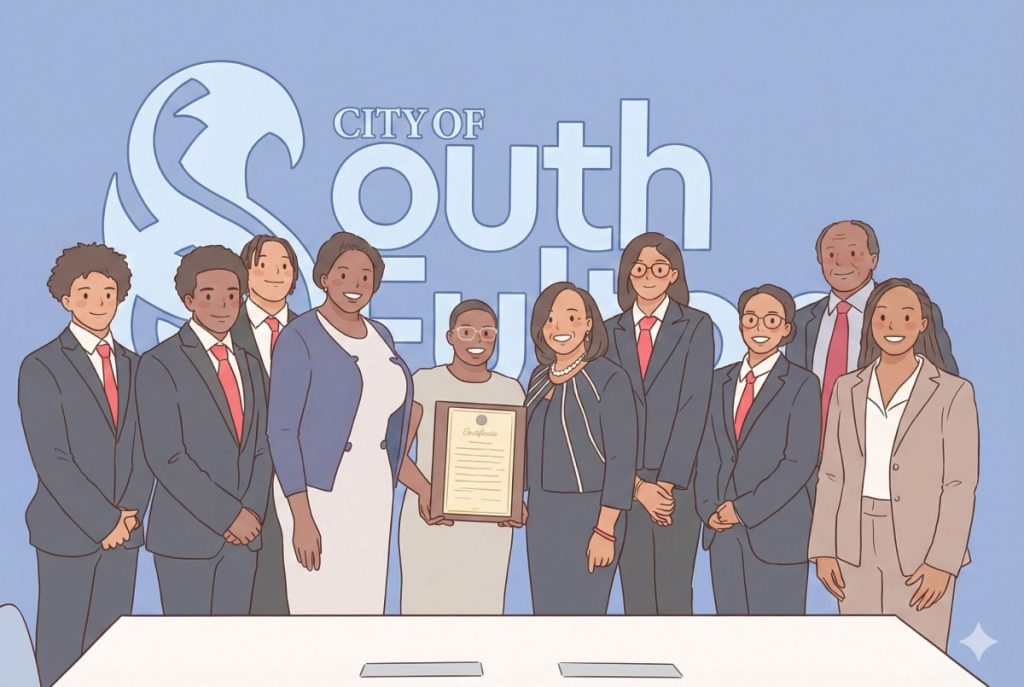
In 2025, the city of South Fulton adopted Georgia’s first city resolution based on the DPCW. For the youth leader, this kind of official recognition can help move an initiative beyond a one-time event and toward broader social change.

Her work continued in 2026 through Play4Peace ATL 2026, a three-week youth leadership camp organized with HWPL. Soccer was used as a central activity, but the purpose went beyond sport.

Young participants engaged in activities involving communication, cooperation, conflict resolution, and leadership. More than 200 young leaders were directly supported, while the program reached a wider circle of families and community members.

There is something compelling about this approach.

Sport naturally creates situations in which people must cooperate with others. Players have different personalities, abilities, and backgrounds, yet they still have to function as a team.

That makes sport a useful environment for teaching social skills that are also important for peacebuilding.

The organization’s motto expresses this idea well:

“Our children will always play, so they may as well play for peace.”

It is not a complicated concept. If young people are already gathering to play, those spaces can also become opportunities to develop leadership, empathy, and conflict-resolution skills.

In this sense, youth leadership is not simply preparation for the future. It is a form of peacebuilding in the present.

4. What Georgia’s Peace Resolutions Can Teach Us About Peace and Human Rights

Today, seven places in Georgia have adopted DPCW-based resolutions: South Fulton, Fairburn, Jonesboro, Atlanta, Palmetto, Stonecrest, and DeKalb County.

The significance of these resolutions, however, should not be measured only by the number of places that have adopted them.

The more important question is what happens afterward.

The experiences of these two community leaders suggest that a resolution can provide a structure for continued engagement. It can bring local government, civil society, youth organizations, and residents into a common conversation about violence prevention, education, and community responsibility.

That is where a symbolic declaration can acquire practical meaning.

For the first leader, the key concepts are compassion and communication. For the second, they are youth leadership and partnership. Their methods are different, but both see peace as something that must be practiced within communities.

This perspective also resonates with me as a physician interested in peace and human rights.

Medicine often deals with the consequences of violence. But protecting health also requires attention to the conditions that produce fear, insecurity, trauma, and social isolation.

A child growing up in a violent environment is not only facing a social problem. That environment can affect the child’s physical and psychological well-being for years.

This is why I think the connection between peace, human rights, and community health deserves more attention.

Peacebuilding does not always begin with international diplomacy. Sometimes it begins with a local government, a youth program, a conversation, or a community leader deciding that violence should not be accepted as inevitable.

The stories of these two leaders show how personal experiences can develop into public action.

One transformed experiences of war and loss into a commitment to compassion and community dialogue. The other turned her own experience of mentorship into a mission to develop young leaders.

Their work also illustrates an important point about DPCW-based resolutions.

A resolution can mark a commitment, but the deeper challenge is implementation.

Can it encourage peace education?
Can it support violence prevention?
Can it strengthen dialogue among people with different backgrounds?
Can young people become active participants rather than simply recipients of a peace message?

These are the questions that will determine whether a resolution becomes part of a community’s daily life.

For me, that is ultimately why these developments in Georgia are worth watching.

Peace is not only a matter for governments and international organizations. It is also a question of how communities treat their most vulnerable members and how they prepare the next generation to live together.

A resolution may begin with words.

Its lasting value comes from what people choose to do with those words. 🕊️🌍

Source: Two People Who Moved the State of Georgia: Building Peace Through DPCW Resolutions – HWPL

The Chairman Man-hee Lee’s First Peace Tour in Europe: The Beginning of a Civilian Peace Movement

  • 🌍 In May 2012, The Chairman Lee Man-hee began his first international peace tour in Europe, focusing on world peace and the peaceful reunification of the Korean Peninsula.
  • 🕊️ In Germany, he discussed the experience of German reunification with a former East German prime minister and considered possible lessons for Korea.
  • 🤝 In Austria, he met with a Catholic abbot and engaged in a conversation about the Bible, crossing denominational boundaries.
  • 📖 Religious seminars and public gatherings in Germany attracted participants from several countries and received attention from local media.
  • 🌏 Looking back from the perspective of peace and human rights, the journey raises broader questions about the role of civilians, religious communities, dialogue, and historical memory in pursuing peace.
A STEP TOWARDS PEACE The Chairman Man-hee Lee’s First Peace Tour in Europe: The Beginning of a Civilian Peace Movement World Peace Religious Freedom Religious Dialogue peacebuilding peace movement man hee lee peace tour Korean Reunification Interfaith dialogue human rights Germany Reunification

When we talk about peace, we often think first of governments, diplomats, international organizations, and formal peace agreements. 🕊️ Yet peace is also discussed and pursued by individuals, religious communities, and civil society.

In May 2012, The Chairman Lee Man-hee began what became his first international peace tour in Europe. At that time, HWPL had not yet been established, and his early international activities were conducted as a representative of Shincheonji.

Europe was a meaningful starting point. 🇩🇪 The continent had experienced religious conflicts, two world wars, political division, and the separation of Germany into East and West. Yet Germany had also experienced reunification after decades of division.

During this first European journey, The Chairman Lee Man-hee discussed German reunification, the possibility of peaceful reunification on the Korean Peninsula, religious dialogue, and his understanding of the Bible.

For someone interested in peace and human rights, this journey offers an opportunity to consider an important question:

What can individuals and religious communities contribute to peace when political divisions remain deeply entrenched? 🌍

🌍 Learning from German Reunification

One of the most notable events during the 2012 tour was a meeting in Potsdam with a former prime minister of East Germany.

The former East German prime minister had been an important political figure during the final period of East Germany and the process that led to German reunification. During their conversation, The Chairman Man-hee Lee asked about the German experience and discussed the possibility of peaceful reunification on the Korean Peninsula.

🕊️ One point emphasized during the conversation was the importance of peaceful public demonstrations.

According to the former prime minister, the roots of German reunification could be found in peaceful demonstrations by citizens. He explained that his role at the time was largely to help the power of the people spread.

This provides an interesting perspective on reunification.

Political leaders and governments certainly play important roles in major historical changes. However, the German experience also demonstrated that public participation can become an important force for political transformation.

📞 Another aspect discussed was communication between East and West Germany.

Although Germany was politically divided, connections between people had not completely disappeared. People could communicate by telephone, exchange mail, and watch television from the other side.

In other words, the division did not completely eliminate contact between people.

This point is particularly interesting when considering the Korean Peninsula. 🇰🇷 The political and security circumstances of Korea are very different from those of divided Germany, so the German experience cannot simply be copied.

Nevertheless, the conversation highlighted the potential importance of communication, historical memory, public participation, and education when thinking about reunification.

The former East German prime minister also emphasized the importance of helping young Koreans maintain an understanding of reunification.

👥 This is an issue that extends beyond politics. If younger generations gradually lose interest in or knowledge of the history of division, the social meaning of reunification can also change.

For this reason, education and historical awareness can become part of the longer-term conversation about peace.

🤝 A Conversation Across Religious Boundaries

The first European tour was not limited to political and historical discussions.

On May 14, The Chairman Lee Man-hee visited a Catholic monastery in Austria and met with its abbot. ⛪ During their meeting, they had an open conversation about the Bible.

The monastery itself represented a long European religious tradition. The visit also included access to areas of the monastery that were not ordinarily open to visitors, including its chapel and historic library.

📚 The conversation between The Chairman Man-hee Lee and the Catholic abbot centered on their understanding of the Bible and religious beliefs.

From a broader perspective, this encounter illustrates one of the recurring challenges of religious life: how can people from different traditions communicate with one another despite theological differences?

Catholic Christianity and Shincheonji have significant differences in theology and religious interpretation. Therefore, dialogue does not necessarily mean agreement.

But dialogue can still have value. 🤝

People do not have to reach identical conclusions in order to listen to one another. In a world where religious differences can sometimes become sources of tension, creating opportunities for communication may be meaningful in itself.

As someone interested in human rights, I believe this question deserves attention.

🕊️ Religious freedom is not simply about protecting one’s own beliefs. It also involves considering how people with different beliefs can coexist peacefully and respectfully.

The meeting described during the 2012 tour therefore provides an example of a conversation that crossed denominational boundaries, even though the participants came from different religious traditions.

A STEP TOWARDS PEACE The Chairman Man-hee Lee’s First Peace Tour in Europe: The Beginning of a Civilian Peace Movement World Peace Religious Freedom Religious Dialogue peacebuilding peace movement man hee lee peace tour Korean Reunification Interfaith dialogue human rights Germany Reunification

📖 Religious Gatherings and International Interest

Another major part of the first European tour involved religious seminars and public conferences in Germany.

The Chairman Lee Man-hee participated in a conference in Frankfurt on May 7 and later held large gatherings in Berlin on May 11 and 12.

At this stage, before HWPL’s later activities became prominent, his public message was primarily religious and focused on his interpretation of the Bible. According to the article, around 400 religious participants, including religious leaders from 25 countries, attended the Berlin gathering. 🌍

The response from participants was described as enthusiastic.

One local columnist reportedly said that the gathering seemed to address questions she had been seeking answers to. Another religious leader who had come temporarily to Germany from the Democratic Republic of the Congo reportedly made considerable effort to follow the lecture despite the need for interpretation between Korean, German, and another language.

🌐 His reaction was particularly notable because he reportedly expressed a desire for a larger event in the future and invited The Chairman Lee Man-hee to speak at a conference in the Congo.

These accounts show that the gatherings were not limited to a single national audience. Participants from different countries encountered a religious message originating from Korea.

This international dimension is important when thinking about communication.

Ideas about peace, religion, and reconciliation do not exist in isolation. They move between countries through people, conferences, religious communities, media, and personal relationships.

💬 Whether people agree with a particular religious message or not, the ability to communicate across cultural and national boundaries remains an important part of international dialogue.

📰 Media Attention and the Meaning of the Journey Today

The first European tour also attracted attention from several local media outlets.

German media organizations reported on the gatherings and interviewed The Chairman Lee Man-hee. According to the article, Leipzig Fernsehen covered the Berlin gathering and interviewed him, while Rhein-Main TV broadcast an interview connected to the Frankfurt conference.

📺 JeetTV also streamed a gathering online, and a North Berlin weekly newspaper later reported on the Berlin event.

The media coverage is significant because it shows how the activities were presented to a wider public beyond those physically attending the events.

The journey itself took place in 2012, but the themes discussed during it remain relevant today.

🌍 The Korean Peninsula is still divided.
🕊️ Armed conflicts continue in different parts of the world.
🤝 Religious differences remain an important part of many social and political debates.
👥 Younger generations continue to inherit the consequences of historical conflicts they did not personally experience.

From the perspective of a physician interested in peace and human rights, these issues are difficult to separate from the value of human life.

Medicine teaches us to look beyond abstract categories and remember the individual person behind them. War and division similarly affect individuals: families are separated, communities experience loss, and people can carry the consequences of conflict for generations.

For me, this is why discussions about peace deserve to extend beyond political negotiations alone. 🕊️

The story of The Chairman Lee Man-hee’s first European peace tour does not provide a simple solution to the Korean Peninsula’s division. Germany’s history cannot simply be transferred to Korea, and religious dialogue cannot by itself resolve political conflicts.

But the journey does highlight several ideas worth considering:

Communication matters. 💬
Historical memory matters. 📚
Peaceful public participation matters. 👥
Dialogue across religious boundaries matters. 🤝
And the willingness to imagine reconciliation matters. 🕊️

Ultimately, peace is not only about ending a conflict on paper. It is also about creating conditions in which people who have been separated by history can once again communicate, understand one another, and envision a different future.

🌏 Looking back at The Chairman Lee Man-hee’s first peace tour in Europe from this perspective, the journey can be seen as an early chapter in a broader effort to communicate ideas about world peace and Korean reunification across national and religious boundaries.

And perhaps the most important question remains the simplest one:

If peace is something humanity needs, who is responsible for pursuing it?

Governments have a role. International organizations have a role. Religious communities have a role.

And perhaps civilians do, too. 🕊️🌍🤝

Reference: https://www.newscj.com/news/articleView.html?idxno=3425630

Archbishop Antonio Ledesma: “Lee Man-hee is a Peacemaker Devoted to Interfaith Harmony”

Sometimes, the most meaningful words come not from those who are closest to us, but from someone who has walked a very different path.

Recently, Archbishop Emeritus Antonio Ledesma of the Archdiocese of Cagayan de Oro in the Philippines sent a letter to Lee Man-hee, chairman of Heavenly Culture, World Peace, Restoration of Light (HWPL). In his letter, Archbishop Ledesma expressed concern for Lee’s health and offered prayers for his strength, comfort, recovery, and well-being.

A STEP TOWARDS PEACE Archbishop Antonio Ledesma: “Lee Man-hee is a Peacemaker Devoted to Interfaith Harmony” Philippine Mindanao Peacebuilding Man Hee Lee Archbishop Antonio Ledesma

What caught my attention, however, was not simply the expression of concern for an elderly man. It was the reason Archbishop Ledesma gave for remembering him.

He recalled meeting Lee in 2013 and remembered him as someone who had devoted himself to the cause of peace. In particular, he referred to Lee’s activities in Mindanao, where religious tensions between Christian and Muslim communities had long been intertwined with social and political conflict.

For Archbishop Ledesma, what mattered was Lee’s effort to bring people from different religious backgrounds together.

He specifically remembered how Muslim and Catholic leaders were brought into dialogue and how Lee sought to encourage them to meet one another not as opponents, but as people who could share a common desire for peace.

This is an important point.

Religious differences are often discussed in terms of doctrine—what one believes, how one worships, and which traditions one follows. But peace begins somewhere else. It begins when people who disagree are still willing to sit at the same table.

The Mindanao peace efforts are remembered in this context. In January 2014, Catholic and Muslim leaders participated in a civilian-led peace initiative in which they expressed their commitment to preventing religion from becoming a source of conflict. Archbishop Ledesma has remained involved in interfaith peace activities connected with this work over the years.

Perhaps this is why his recent letter feels particularly meaningful.

Archbishop Ledesma did not describe Lee simply as the leader of another religious organization. Instead, he remembered a person he had personally encountered years ago and evaluated what he saw through the lens of peace.

He wrote that Lee’s efforts had deeply moved many people, including himself, because they represented a desire to overcome prejudice and differences and to pursue harmony among people.

I find something deeply human in that perspective.

We often judge people according to the groups to which they belong. Once someone becomes associated with a particular religion, organization, or controversy, it can become difficult to see the individual behind the label.

But Archbishop Ledesma’s letter reminded me that a person can be viewed from more than one angle.

One may agree or disagree with someone’s religious beliefs. One may have questions about an organization. Yet it is still possible to recognize an individual’s sincere efforts toward dialogue and peace.

That does not require blind agreement. It simply requires the ability to acknowledge what another person has tried to accomplish.

What touched me most was the closing sentiment of Archbishop Ledesma’s letter. He said that he continues to pray for Lee and for a positive resolution to the difficulties surrounding him. He also expressed his willingness to help if there is anything he can do for peace and justice.

For me, this is perhaps the most important message in the entire letter.

Peace is not only something discussed at international conferences. Sometimes it begins with one person choosing to remain compassionate toward another person—even when circumstances are difficult and opinions are divided.

As a physician, I naturally think about people first as human beings before anything else. And perhaps that is why this letter stayed with me.

A ninety-five-year-old man may be a religious leader, a public figure, or a controversial figure to different people. But before all those descriptions, he is still a human being whose health, dignity, and life matter.

Archbishop Ledesma’s message reminded me that peace is not merely the absence of conflict between nations or religions.

Sometimes, peace begins with the simple decision to see the person on the other side. And perhaps that is why his voice is worth hearing.

Source: https://vo.la/623KPEY

Peace is up to you :0 Good luck!

How Young People Are Shaping a More Peaceful and Inclusive World: Belgium, Malawi

🌍 Antwerp Peace Forum Highlights the Power of Dialogue and Social Inclusion 🤝

A STEP TOWARDS PEACE How Young People Are Shaping a More Peaceful and Inclusive World: Belgium, Malawi MalawiYouthPeaceEducation IPYG HWPL GlobalCitizenshipEducation AntwerpBelgiumPeaceForum

Bringing together students, young leaders, and community members, a recent peace forum in Antwerp, Belgium, explored how meaningful conversations can help build stronger and more inclusive societies. 🌿

Held in recognition of a global peace initiative anniversary, the event addressed pressing topics such as migration, cultural diversity, social disparities, and community cohesion.

Rather than following a lecture-based format, participants actively exchanged perspectives on the roots of social conflict and discussed practical approaches to fostering understanding and respect across different cultures. 🕊️

The forum also encouraged discussions on youth engagement, international cooperation, and grassroots peacebuilding efforts, emphasizing that sustainable peace grows through dialogue, participation, and mutual trust. 🌎✨

Source: HWPL Holds Peace Forum in Antwerp, Belgium https://vo.la/9I6T0eK

🌍 2026 Malawi Youth Empowerment Peace Class(YEPC) Empowers Future Leaders in the Digital Age 🚀

A STEP TOWARDS PEACE How Young People Are Shaping a More Peaceful and Inclusive World: Belgium, Malawi MalawiYouthPeaceEducation IPYG HWPL GlobalCitizenshipEducation AntwerpBelgiumPeaceForum

A month-long online youth development initiative in Malawi is set to equip young people with the knowledge and skills needed to become active global citizens and community leaders. 🌱

The program focuses on promoting peace, leadership, cultural understanding, and digital literacy through a series of interactive educational sessions. Participants will explore topics such as appreciating cultural and religious diversity, developing leadership qualities that foster unity, and strengthening their ability to navigate an increasingly technology-driven world. 🤝💡

In addition, specialized training on artificial intelligence will introduce practical ways young people can responsibly utilize emerging technologies while preparing for future challenges and opportunities. The program also encourages civic engagement and social responsibility, empowering participants to contribute positively to local communities and broader society. 🕊️

By combining peace education with future-oriented skills, the initiative aims to inspire a new generation of changemakers capable of promoting cooperation, innovation, and sustainable development. 🌎✨

IPYG, 2026 Malawi Youth Empowerment Peace Class (YEPC) https://vo.la/Zwhffw2

Peace is up to you :0 Good luck!

Atlanta Youth Push for Community-Led Solutions to Rising Violence

On May 5, 2026, a 17-year-old high school girl was stabbed in the neck and killed in Gwangju, South Korea. Should crimes like this keep happening? I just want them to stop… I feel as if I can still hear her mother’s cries ringing in my ears.

Key Summary

  • Atlanta community groups highlighted youth perspectives during National Youth Violence Prevention Week.
  • Teen participants said many young people feel ignored when discussing neighborhood safety issues.
  • Limited access to jobs and career opportunities was identified as a major concern among local youth.
  • Nonprofit organizations hosted workshops focused on mentorship, healing, and leadership development.
  • Advocates emphasized that young residents should help shape violence prevention strategies instead of only receiving support services.
  • Community leaders continue promoting long-term approaches centered on trust, opportunity, and collaboration.

Youth Perspectives Take Center Stage in Atlanta

A STEP TOWARDS PEACE Atlanta Youth Push for Community-Led Solutions to Rising Violence youth mentorship programs youth leadership development teen outreach Atlanta public safety discussions community violence prevention Atlanta youth safety initiatives

Concerns surrounding violence involving teenagers have become increasingly urgent across Atlanta in recent weeks. In response, civic leaders and nonprofit organizations created spaces where adolescents could openly discuss the realities affecting their communities.

During a series of public discussions and workshops held throughout National Youth Violence Prevention Week, young participants described the emotional pressures many teenagers experience and the frustration of feeling unheard by older generations.

Several speakers explained that respect and understanding from adults are often missing in conversations about safety, conflict, and mental well-being. Organizers encouraged honest dialogue to better understand what younger residents are experiencing firsthand.


Employment Challenges Remain a Major Issue

A major topic raised during the events was the lack of accessible work opportunities for teenagers and young adults. Participants explained that many young people struggle to find beginner-level employment, internships, or practical career pathways.

Community advocates noted that financial instability and uncertainty about the future can increase stress among adolescents. Some attendees argued that access to steady income and skill-building opportunities could help redirect energy toward positive goals and reduce involvement in harmful environments.

Youth unemployment continues to affect many families across Georgia, especially among individuals entering adulthood for the first time.


Local Organizations Promote Mentorship and Recovery

A STEP TOWARDS PEACE Atlanta Youth Push for Community-Led Solutions to Rising Violence youth mentorship programs youth leadership development teen outreach Atlanta public safety discussions community violence prevention Atlanta youth safety initiatives

Multiple violence prevention initiatives collaborated throughout the week to focus on healing, emotional support, and community engagement. Organizers hosted leadership activities designed to encourage young residents to become active contributors within their neighborhoods.

Mentorship programs played an important role in the discussions. Several participants shared how guidance from community leaders and outreach workers helped them navigate difficult situations and remain focused on personal growth.

Workshops also emphasized relationship-building, conflict resolution, and peer support as important tools for reducing violence at the local level.


Advocates Call for Youth-Inclusive Decision Making

Speakers throughout the events stressed that younger generations should participate directly in conversations about public safety and prevention efforts.

Rather than viewing teenagers only as recipients of services, organizers encouraged communities to recognize them as valuable contributors capable of offering practical ideas and lived experiences.

Supporters of youth-centered initiatives believe that involving young residents in leadership roles can strengthen trust, encourage accountability, and create more effective long-term solutions.


Community Collaboration Continues Across Atlanta

The week’s programs reflected a broader effort across Atlanta to address violence through prevention, outreach, and opportunity-based initiatives.

City leaders, neighborhood organizations, mentors, and volunteers continue working together to develop safer environments for children and teenagers. Many groups are focusing on education, emotional wellness, career readiness, and community partnerships as part of a larger strategy for long-term change.

As conversations continue, one theme remains consistent: many young people want meaningful opportunities to participate in shaping the future of their communities.

Peace is up to you :0 Good luck!


Ending War Before It Begins: A 10-Year Journey of the DPCW

Peace cannot rely on hope alone—it needs structure, agreement, and action. Over the past 10 years, the DPCW has quietly shown how peace can move from an idea into a working global system. 📝


🔑 Key Highlights

  • The DPCW (2016) was created to prevent war before it begins
  • It provides clear legal standards for peace and conflict resolution
  • Built through global cooperation across law, religion, and civil society
  • Supported by international parliaments and 900,000 citizens worldwide
  • Encourages a shift from war-based solutions to law-based systems
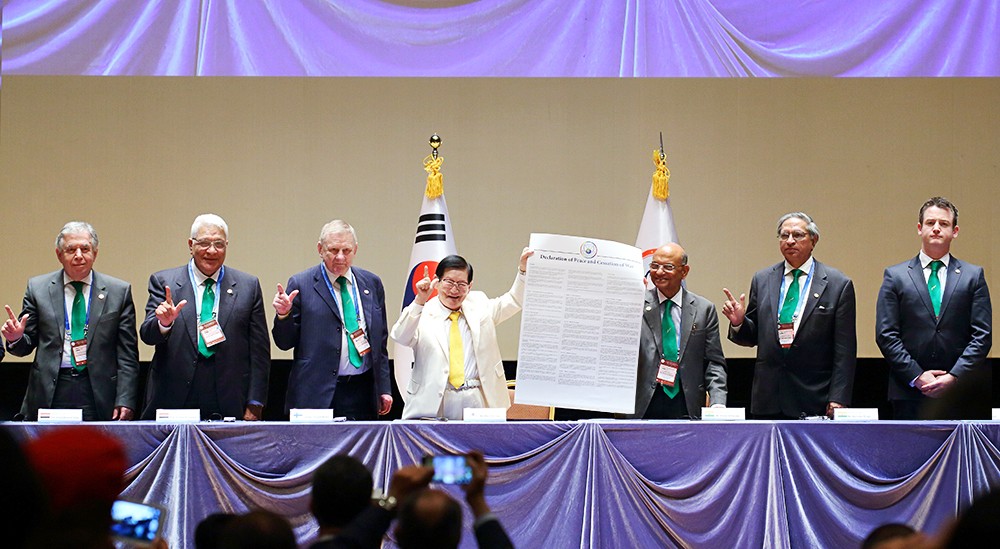
A STEP TOWARDS PEACE Ending War Before It Begins: A 10-Year Journey of the DPCW 이만희 평화실화 WorldPeace Proclaim PeaceThroughLaw peacebuilding Manheelee HWPL GlobalPeace DPCW 10th_Anniversary

🌍 1. Why Do Conflicts Still End in War?

Even today, conflicts often end in violence. However, this pattern is not inevitable. 💡
For generations, humanity has relied on force to resolve disputes. As a result, countless lives—especially young people—have been lost.

So, a deeper question emerges:
What if conflict could be resolved without war?
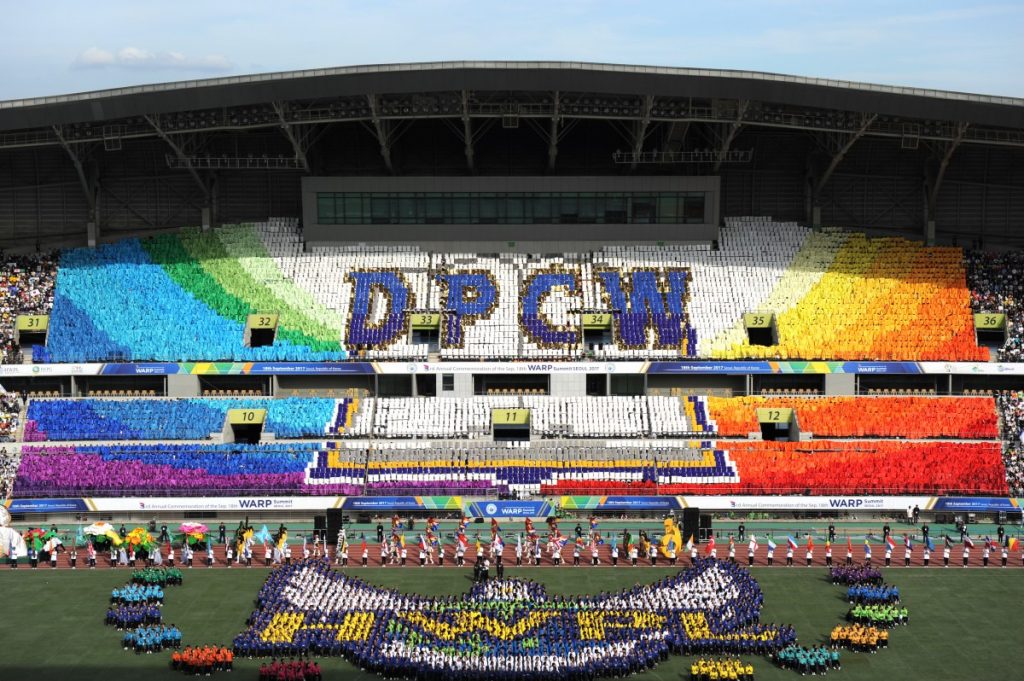
A STEP TOWARDS PEACE Ending War Before It Begins: A 10-Year Journey of the DPCW 이만희 평화실화 WorldPeace Proclaim PeaceThroughLaw peacebuilding Manheelee HWPL GlobalPeace DPCW 10th_Anniversary

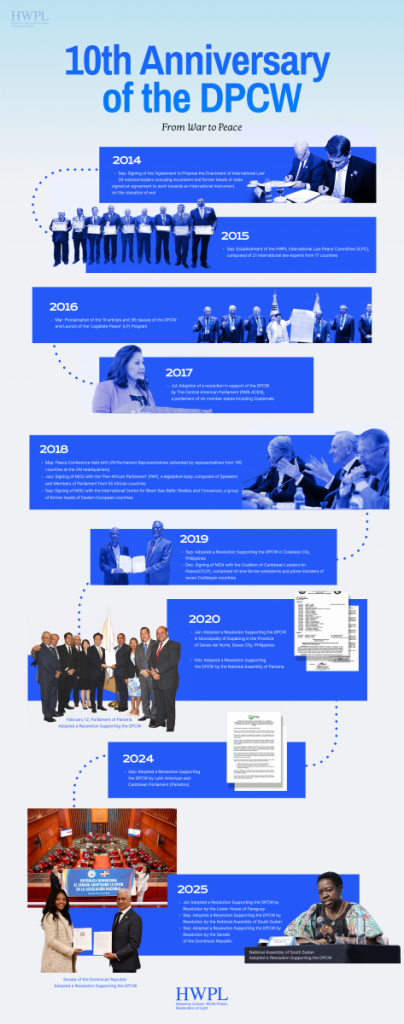
This question led to the creation of the Declaration of Peace and Cessation of War (DPCW) in March 2016.
Rather than reacting to conflicts after they happen, the DPCW focuses on preventing them in the first place.

This shift is simple, yet powerful. Because prevention reduces harm before it begins.


🌱 2. A Movement That Began With the Value of Life

The foundation of this initiative comes from Heavenly Culture, World Peace, Restoration of Light (HWPL). 🌍

This organization was established with one clear purpose:
to protect lives from the tragedy of war and build lasting peace.
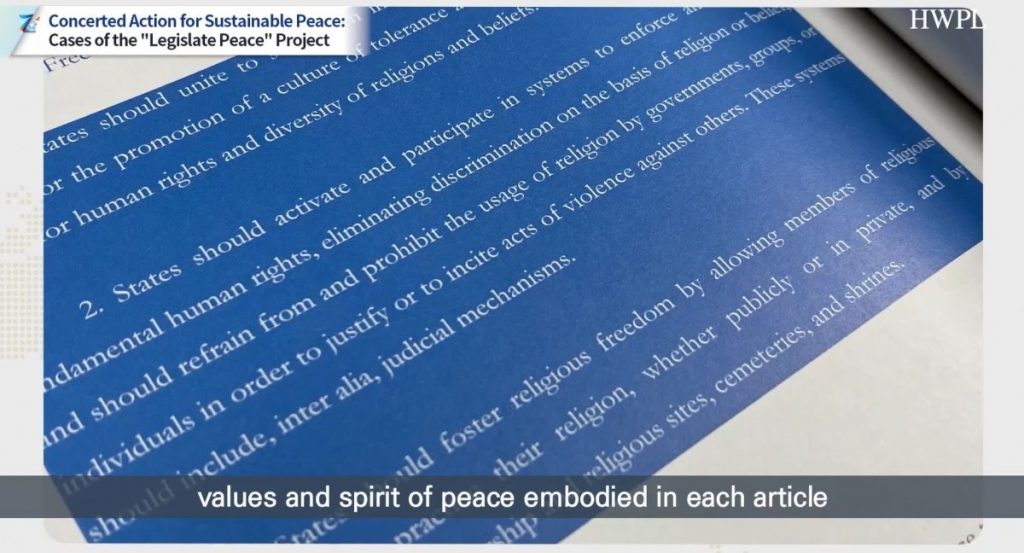
A STEP TOWARDS PEACE Ending War Before It Begins: A 10-Year Journey of the DPCW 이만희 평화실화 WorldPeace Proclaim PeaceThroughLaw peacebuilding Manheelee HWPL GlobalPeace DPCW 10th_Anniversary

From the beginning, HWPL has worked to connect different parts of society. It brought together governments, religious communities, and citizens. In addition, it promoted peace education and interfaith cooperation.

Because peace cannot be built by one group alone, this network became essential.
Over time, these efforts naturally led to the proposal of the DPCW as a shared global standard.


🌟 3. From Global Dialogue to a Shared Declaration

The idea of the DPCW did not appear overnight. It began at the 2014 HWPL World Peace Summit in Seoul. ✨

At that time, leaders from 152 countries gathered. They came from governments, religions, and civil organizations. Despite their differences, they reached one important understanding:

👉 Responding after conflict is not enough. Prevention must come first.
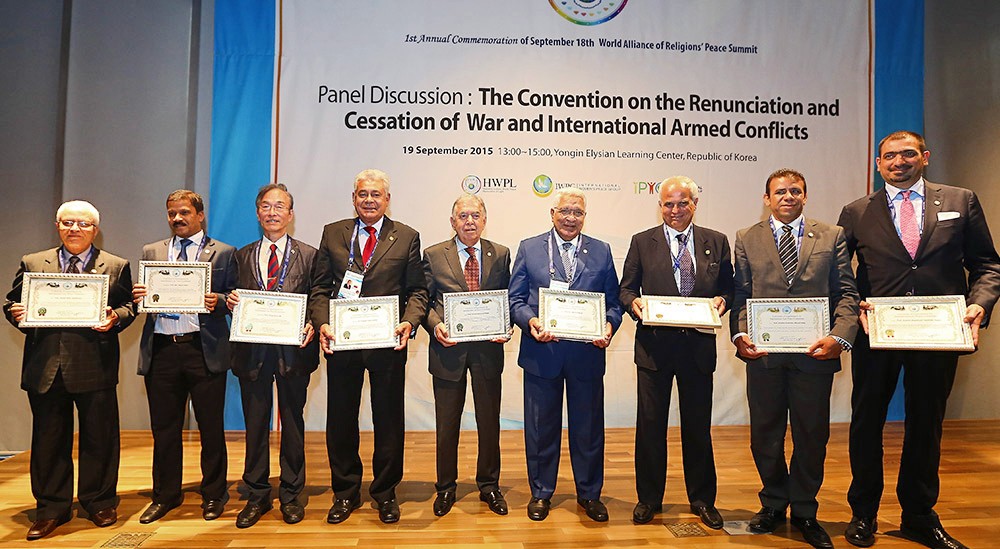
A STEP TOWARDS PEACE Ending War Before It Begins: A 10-Year Journey of the DPCW 이만희 평화실화 WorldPeace Proclaim PeaceThroughLaw peacebuilding Manheelee HWPL GlobalPeace DPCW 10th_Anniversary

Following this, an international law committee was formed in 2015.
Experts carefully reviewed existing laws and discussed new solutions.

As a result, the DPCW was completed with 10 articles and 38 clauses. It was officially proclaimed on March 14, 2016.

This process shows that peace is not abstract. Instead, it can be shaped through discussion, agreement, and legal structure.


⚖️ 4. What Makes the DPCW Different?

The DPCW builds on existing international law. However, it goes a step further by making key principles more practical. 💡

It includes:

  • Clear standards on the use of force
  • Defined procedures for peaceful conflict resolution
  • Stronger systems for international cooperation and collective security
  • Protection of freedom of religion and interfaith collaboration
  • Promotion of a culture of peace with citizen participation
A STEP TOWARDS PEACE Ending War Before It Begins: A 10-Year Journey of the DPCW 이만희 평화실화 WorldPeace Proclaim PeaceThroughLaw peacebuilding Manheelee HWPL GlobalPeace DPCW 10th_Anniversary

Importantly, the DPCW does not replace existing laws. Instead, it strengthens them so they can work more effectively in reality.

Also, it expands responsibility. Not only governments, but also religious groups and civil society play a role.
This broader participation helps peace take root more deeply in everyday life. 🌱


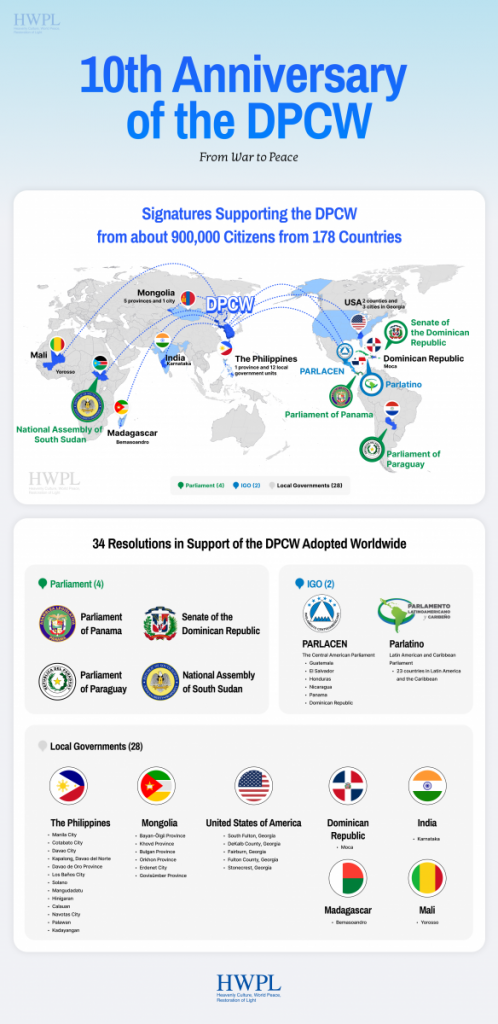
🌍 5. A Decade of Growth: From Agreement to Action
A STEP TOWARDS PEACE Ending War Before It Begins: A 10-Year Journey of the DPCW 이만희 평화실화 WorldPeace Proclaim PeaceThroughLaw peacebuilding Manheelee HWPL GlobalPeace DPCW 10th_Anniversary

Over the past 10 years, support for the DPCW has steadily increased. 🌟

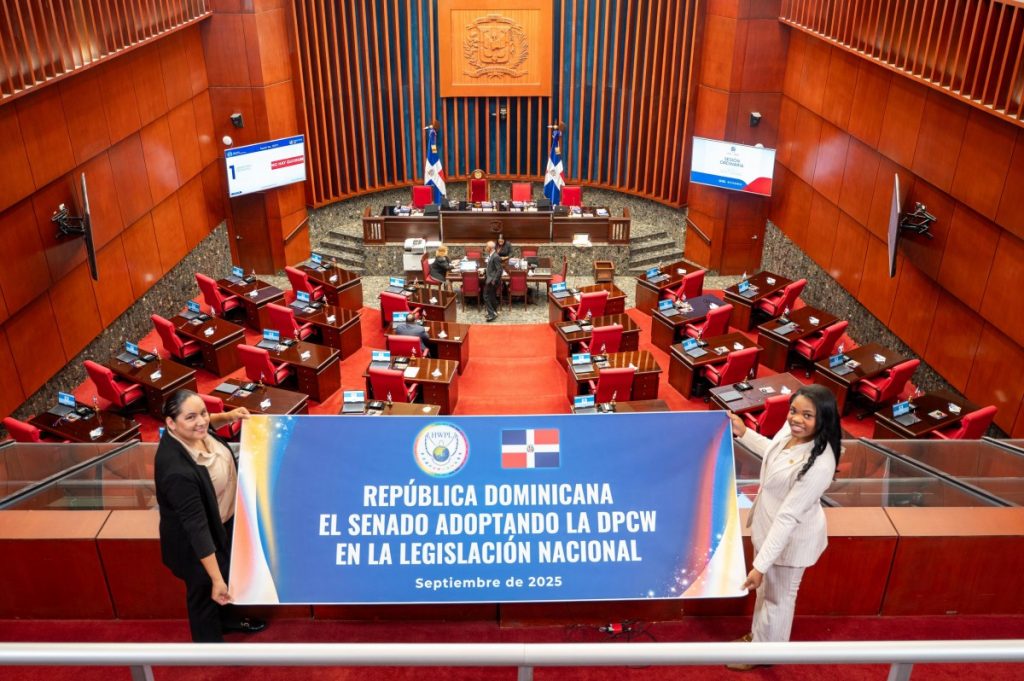
Regional bodies such as the Pan-African Parliament, the Central American Parliament, and the Latin American and Caribbean Parliament have adopted resolutions in support.

More recently, national assemblies in Paraguay, the Dominican Republic, and South Sudan have also expressed their support.

At the same time, citizens around the world have taken part.
About 900,000 people in 178 countries have supported this initiative. ❤️

This shows a meaningful shift.
Peace is no longer only discussed at the government level. It is also supported and shared by people globally.


✨ 6. Beyond War: A New Direction for Humanity

For a long time, war has been seen as a way to end conflict. However, this approach repeats the same cycle.

A real change requires a different system.
Instead of force, we need law, agreement, and cooperation.

The DPCW represents this new direction. It creates a structure where conflicts can be resolved through rules and dialogue, not violence. 💡

Of course, conflict itself will not disappear.
However, the way we respond to it can evolve.

The past decade has built a strong foundation. Now, the next step is to strengthen these efforts and apply them more widely.

A STEP TOWARDS PEACE Ending War Before It Begins: A 10-Year Journey of the DPCW 이만희 평화실화 WorldPeace Proclaim PeaceThroughLaw peacebuilding Manheelee HWPL GlobalPeace DPCW 10th_Anniversary

🌟 Final Thoughts: Peace Is a Choice We Build Together

So, where should humanity go?

Not toward repeated conflict, but toward a future where peace is chosen, strengthened, and protected through shared systems. 🌍

The DPCW reminds us that peace is not distant.
It is something we can build—step by step, together. ✨
Peace is up to you :0 Good luck!

100,000 Voices for Peace: HWPL Joins Brazil’s 18th Walk for Religious Freedom in Rio

📌 Highlight Summary

  • 100,000 people gathered at Copacabana Beach for the 18th Walk for Religious Freedom in September 2024.
  • The event was co-hosted by CCIR and CEAP to promote respect beyond religion and race.
  • Since 2008, the walk has grown into Brazil’s largest interfaith solidarity event, with over 1.8 million participants.
  • HWPL joined the walk, sharing its vision of peace and interfaith harmony with Brazilian society. 🌍🕊️
A STEP TOWARDS PEACE 100,000 Voices for Peace: HWPL Joins Brazil’s 18th Walk for Religious Freedom in Rio warpdialoguebrazil rioreligiousfreedomwalk Man Hee Lee hwplinterfaithpeace copacabanapeacewalk brazilreligioustolerance

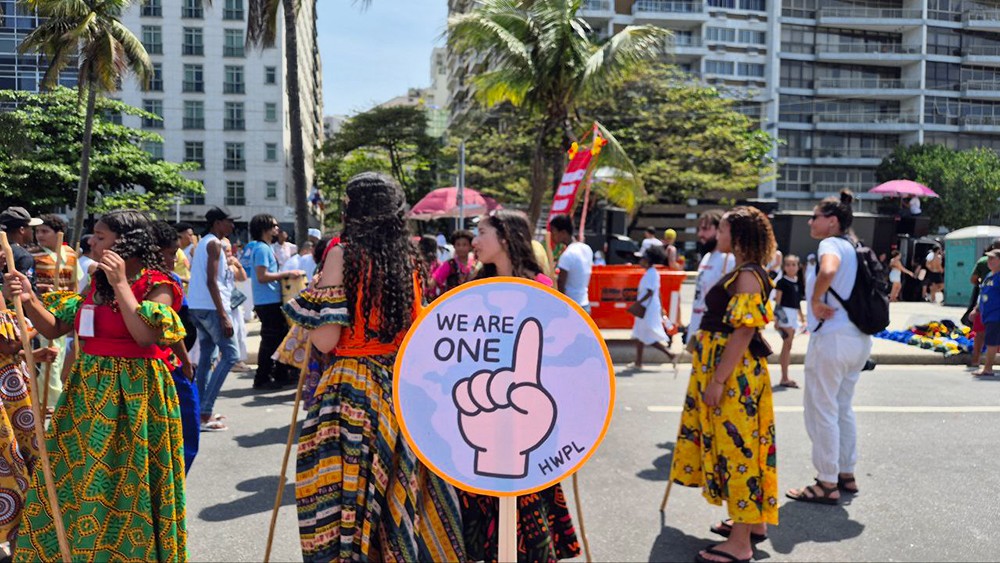
Copacabana Beach in Rio de Janeiro, Brazil, was filled with nearly 100,000 people united by a shared desire for peace. In September 2024, the Brazil branch of HWPL was invited to take part in the 18th Walk for Religious Freedom held at this iconic location.

The event was jointly organized by the Commission for Combating Religious Intolerance (CCIR) and the Center for the Articulation of Marginalized Populations (CEAP). Its purpose was to deliver a powerful message of respect for all people, regardless of religion or race.

Held every third Sunday of September, the walk began after a tragic incident of religious violence in 2008. Over the past 18 years, more than 1.8 million people have participated, making it the largest interfaith solidarity event voluntarily organized by Brazilian civil society.

This year’s event was held under the inspiring theme, “Understanding Each Other Through Song.” During the emotional closing ceremony, participants from various religious traditions joined together in harmony through music.

HWPL and Brazil Share a Common Vision of Peace: “We Are One”

HWPL participated in the walk because the principle of respecting diversity promoted by the organizers closely aligns with HWPL’s own vision for peace.

The event brought together religious leaders and believers from a wide range of traditions, including African-rooted religions such as Candomblé, as well as Catholicism, Protestantism, Buddhism, and Islam. Their united call to protect a secular state and promote coexistence reflects the same spirit found in HWPL’s interfaith dialogue initiatives around the world.

Through its World Alliance of Religions’ Peace (WARP) Offices in Rio de Janeiro and São Paulo, HWPL has been building strong relationships with local religious leaders through Scripture Comparison Discussions. These dialogues have encouraged deeper understanding between different faith communities.

In particular, efforts to foster dialogue between African-rooted religions and Christianity have made a meaningful impact on Brazilian society. Through these ongoing activities, trust has steadily grown between HWPL and local communities.

Continuing the Journey for Peace

By participating in the peace walk, HWPL reaffirmed its commitment to working alongside the Brazilian people to promote harmony and mutual respect.

The director of the HWPL Brazil branch expressed determination to expand these efforts, emphasizing that Brazil’s rich religious diversity provides a meaningful opportunity to strengthen human rights and social harmony through interfaith cooperation.

In a country known for its vibrant mix of cultures and beliefs, initiatives like this walk demonstrate that peace can grow when people choose understanding over division.

Source : A Melody of Harmony Resonates in Rio, Brazil: HWPL Walks Together for Religious Freedom – HWPL

From Tanzania to Mongolia to the U.S.: How Local Communities Are Building Peace Together

🌍 Key Point First
Peace is not just something we talk about — it grows when citizens, students, and young people practice it in their everyday lives 🌱🕊️

HWPL Hosts Tanzania Nyerere National Day Event to Promote Peace and Health

A STEP TOWARDS PEACE From Tanzania to Mongolia to the U.S.: How Local Communities Are Building Peace Together 이만희 평화실화 USYouthPeace TanzaniaPeaceEducation PeaceThroughCommunity MongoliaSchoolPeace Manheelee man hee lee true story of peace GlobalPeaceAction

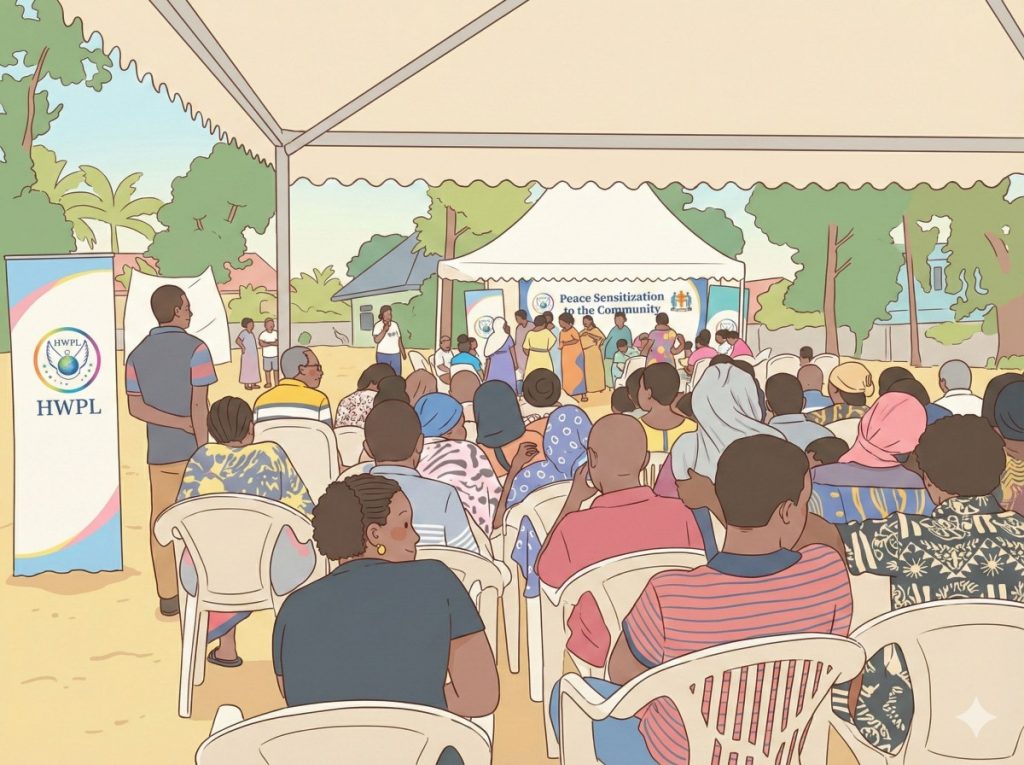
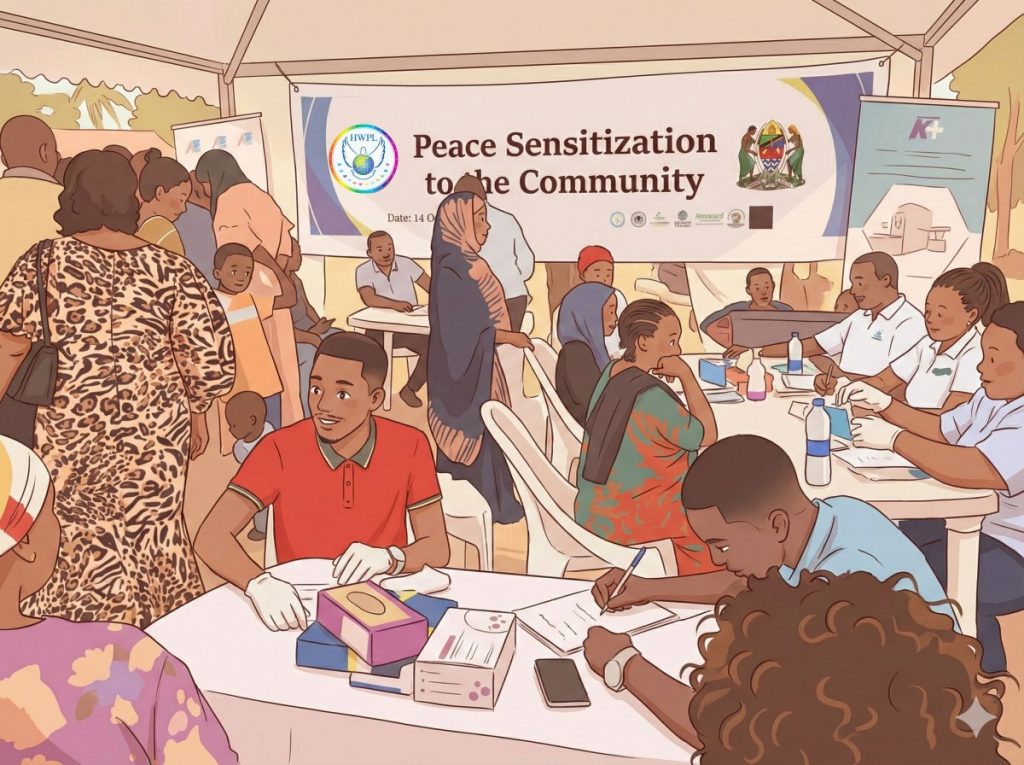
On October 14, HWPL Global 02 Tanzania Branch co-hosted the Nyerere National Day event in Tanzania. The event was held with the Tanzanian government and a local community organization. About 180 people attended, including local citizens, government officials, NGO workers, and medical staff.

The event focused on peace and health in the community. It was organized at the request of the Ministry of Health. Speakers talked about why good health helps create peaceful lives. Medical staff also offered free health checkups, so people could learn about their health in a simple and practical way.

A STEP TOWARDS PEACE From Tanzania to Mongolia to the U.S.: How Local Communities Are Building Peace Together 이만희 평화실화 USYouthPeace TanzaniaPeaceEducation PeaceThroughCommunity MongoliaSchoolPeace Manheelee man hee lee true story of peace GlobalPeaceAction

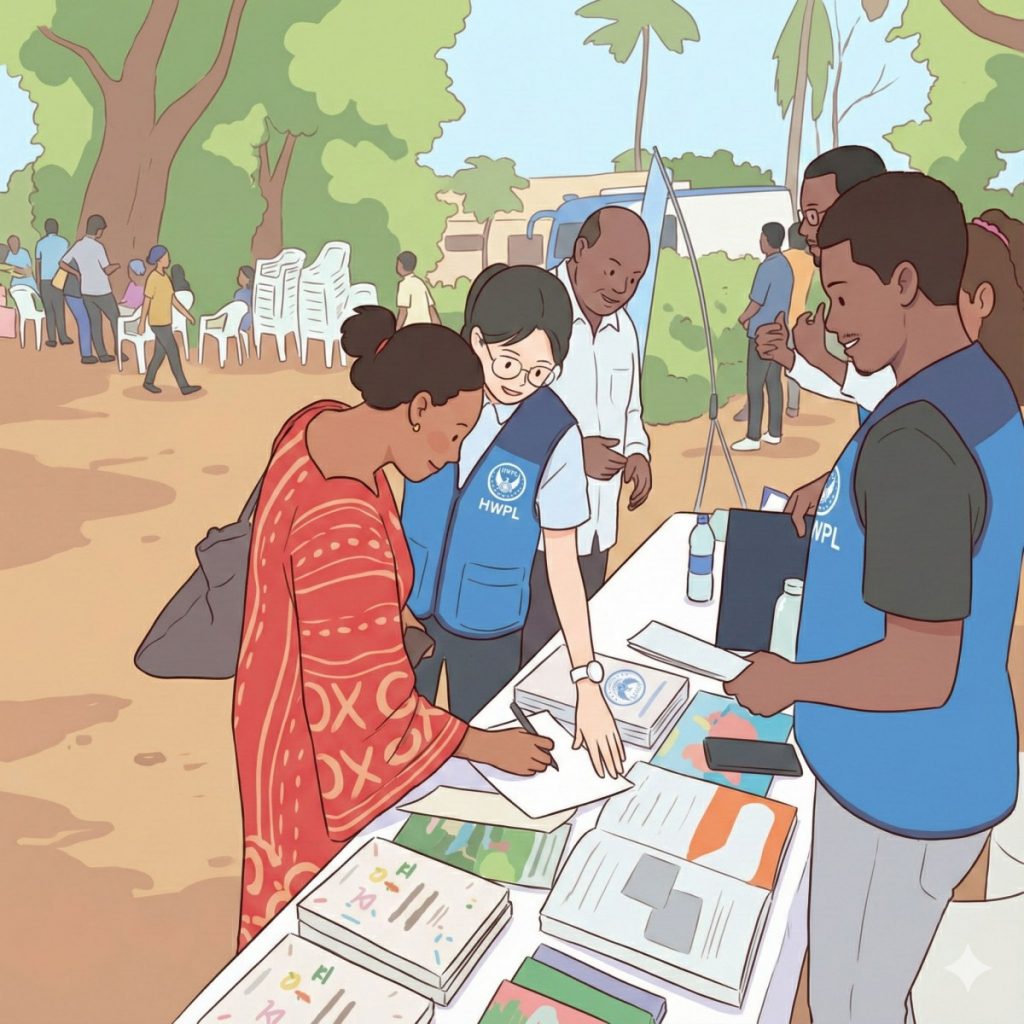
Seven organizations joined the event with information booths, such as banks, hospitals, and NGOs. HWPL introduced its peace education and international cooperation activities. Many visitors showed strong interest in learning how peace can be practiced in daily life.

The event was broadcast on a major national TV channel in Tanzania. Organizers said this event was not just about health. It helped people understand the value of peace and encouraged them to act with peace in their communities.

A STEP TOWARDS PEACE From Tanzania to Mongolia to the U.S.: How Local Communities Are Building Peace Together 이만희 평화실화 USYouthPeace TanzaniaPeaceEducation PeaceThroughCommunity MongoliaSchoolPeace Manheelee man hee lee true story of peace GlobalPeaceAction

HWPL Peace Education Graduation Held at School No.109 in Mongolia

A STEP TOWARDS PEACE From Tanzania to Mongolia to the U.S.: How Local Communities Are Building Peace Together 이만희 평화실화 USYouthPeace TanzaniaPeaceEducation PeaceThroughCommunity MongoliaSchoolPeace Manheelee man hee lee true story of peace GlobalPeaceAction

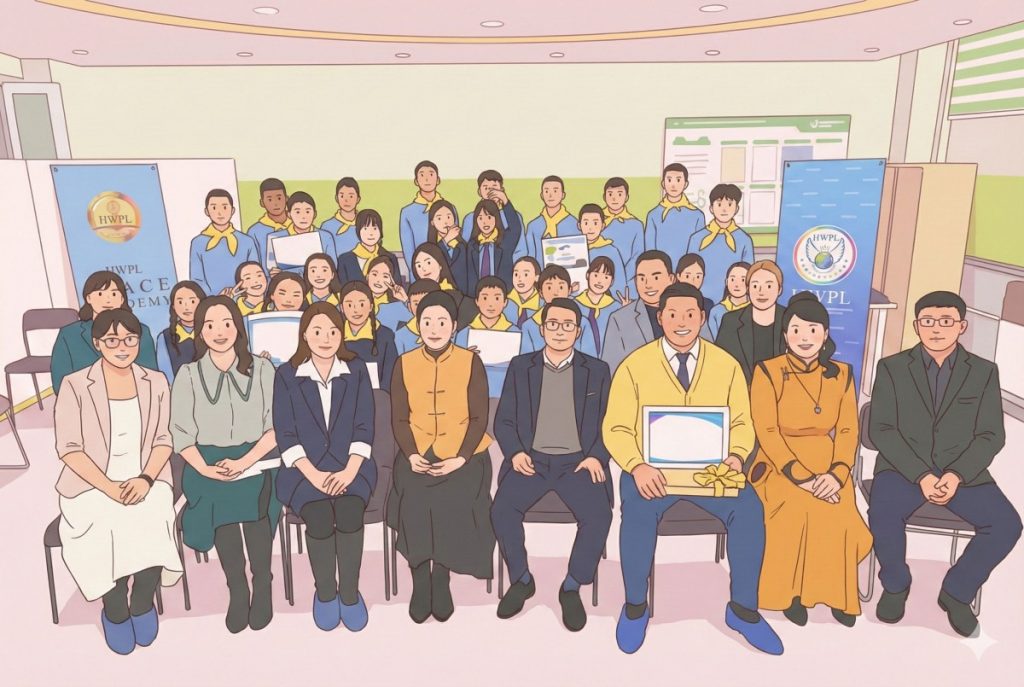
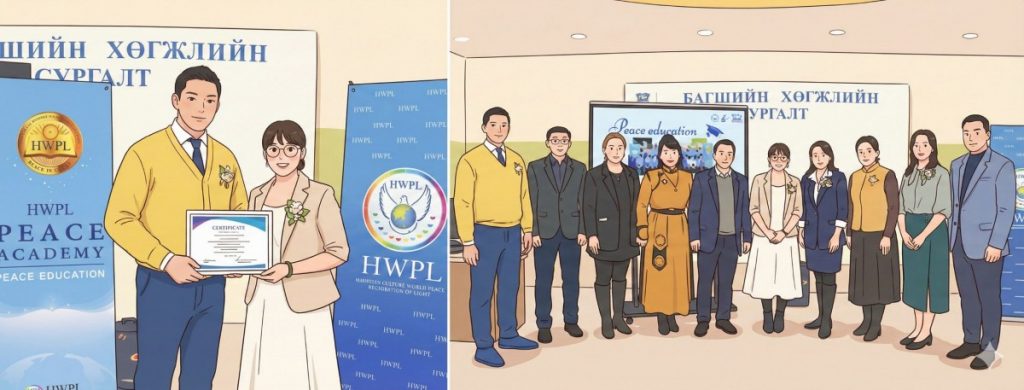
On October 17, HWPL held a Peace Education Graduation Ceremony for Grade 9 Class 1 students at School No.109 in Nalaikh District, Ulaanbaatar, Mongolia. This program was carried out in cooperation with a local lifelong education center and followed HWPL’s official 12-lesson peace education curriculum over five months.

A total of 45 students completed the course, along with teachers and invited guests attending the ceremony. During the program, students took part in activities such as writing peace letters and creating a “Tree of Peace,” which helped them reflect on themselves and better understand others.

A STEP TOWARDS PEACE From Tanzania to Mongolia to the U.S.: How Local Communities Are Building Peace Together 이만희 평화실화 USYouthPeace TanzaniaPeaceEducation PeaceThroughCommunity MongoliaSchoolPeace Manheelee man hee lee true story of peace GlobalPeaceAction

Teachers shared that the class, once known for frequent conflict, showed clear positive changes in behavior and attitude. Students received certificates and small gifts, celebrating their growth with bright smiles.

The event gained strong support from school leaders and local figures, and it was seen as an important step toward expanding peace education for youth across the Nalaikh area in Mongolia.

AYLCI and IPYG Partner to Empower Youth-Led Peacebuilding in the U.S.

A STEP TOWARDS PEACE From Tanzania to Mongolia to the U.S.: How Local Communities Are Building Peace Together 이만희 평화실화 USYouthPeace TanzaniaPeaceEducation PeaceThroughCommunity MongoliaSchoolPeace Manheelee man hee lee true story of peace GlobalPeaceAction

AYLCI, a youth leadership organization based in Georgia and a member of IPYG, partnered with IPYG to launch youth-led peace initiatives in the Atlanta area. Through projects like “Play4Peace ATL,” young people shared real-life conflict experiences, learned how to communicate with public officials, and practiced writing policy proposals for peace.

Their efforts led several cities and counties to officially support peace culture and declare local “Weekend of Peace” events. This collaboration was recognized as a new youth peace leadership model that combines peace education, civic engagement, and leadership development, showing how young people can take an active role in building peace in their communities.

Source:
[한국인 이만희 평화실화 FOCUS│HWPL 뉴스레터(155)] 탄자니아·몽골·미국서 HWPL 평화모델 확산 < 특별기획 < 기획 < 기사본문 – 천지일보

Peace is up to you :0 Good luck!

How Peace Takes Shape Worldwide: Education, Youth, Faith, and Global Solidarity

Key Highlights 📝✨
  • Language education helped bridge cultural gaps and build mutual respect in Timor-Leste 🌍
  • Youth and citizens practiced unity through a Peace Olympics, turning participation into action 💡
  • Interfaith meditation created a shared space for understanding beyond religious differences 🌱
  • A global prayer gathering united people across borders in response to earthquake recovery ❤️
  • Education, youth engagement, reflection, and solidarity emerged as practical paths to peace 🌟

Language Education as a Path to Mutual Respect 🌱✨

A STEP TOWARDS PEACE How Peace Takes Shape Worldwide: Education, Youth, Faith, and Global Solidarity 이만희 평화실화 UgandaPeaceOlympics TimorLestePeace ThailandInterfaithPeace MyanmarEarthquakeRecovery Manheelee man hee lee true story of peace GlobalPeaceEducation

In a diverse society like Timor-Leste, language education plays a powerful role in bringing people closer. Through Korean language classes, participants did more than learn consonants and vowels. They also experienced cultural exchange through games and interactive activities, which made learning enjoyable and meaningful.

A STEP TOWARDS PEACE How Peace Takes Shape Worldwide: Education, Youth, Faith, and Global Solidarity 이만희 평화실화 UgandaPeaceOlympics TimorLestePeace ThailandInterfaithPeace MyanmarEarthquakeRecovery Manheelee man hee lee true story of peace GlobalPeaceEducation

As a result, the classroom became a space where differences felt smaller and understanding grew naturally. This approach showed that education can gently deliver a message of peace—that even when cultures differ, people can still walk forward together. 🌍💡

The Peace Olympics Bringing Youth and Citizens Together 🌍✨

A STEP TOWARDS PEACE How Peace Takes Shape Worldwide: Education, Youth, Faith, and Global Solidarity 이만희 평화실화 UgandaPeaceOlympics TimorLestePeace ThailandInterfaithPeace MyanmarEarthquakeRecovery Manheelee man hee lee true story of peace GlobalPeaceEducation

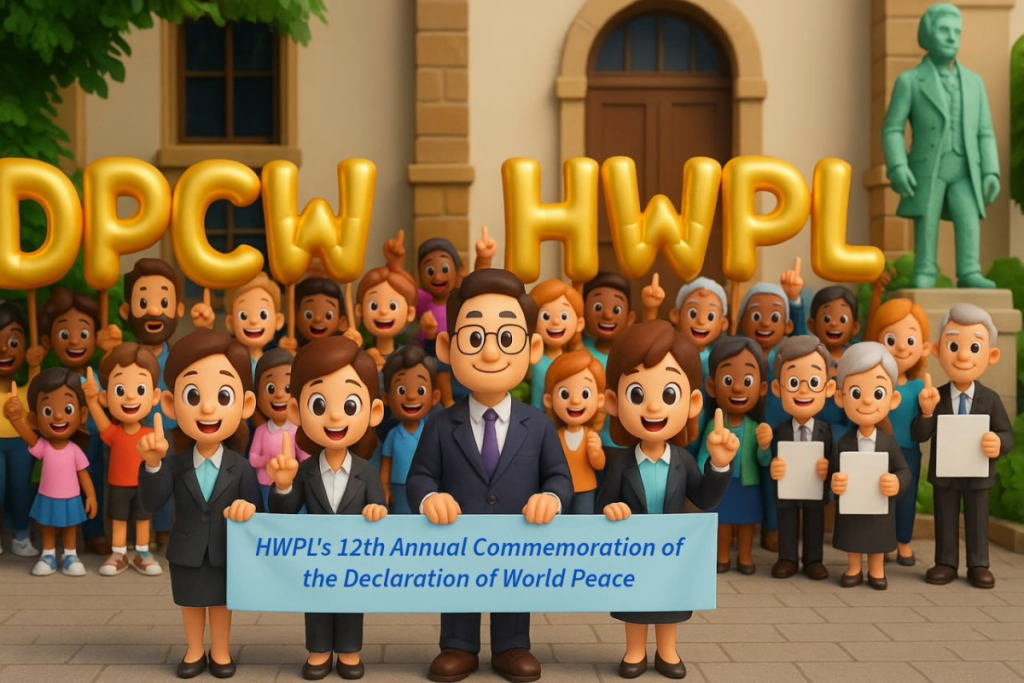
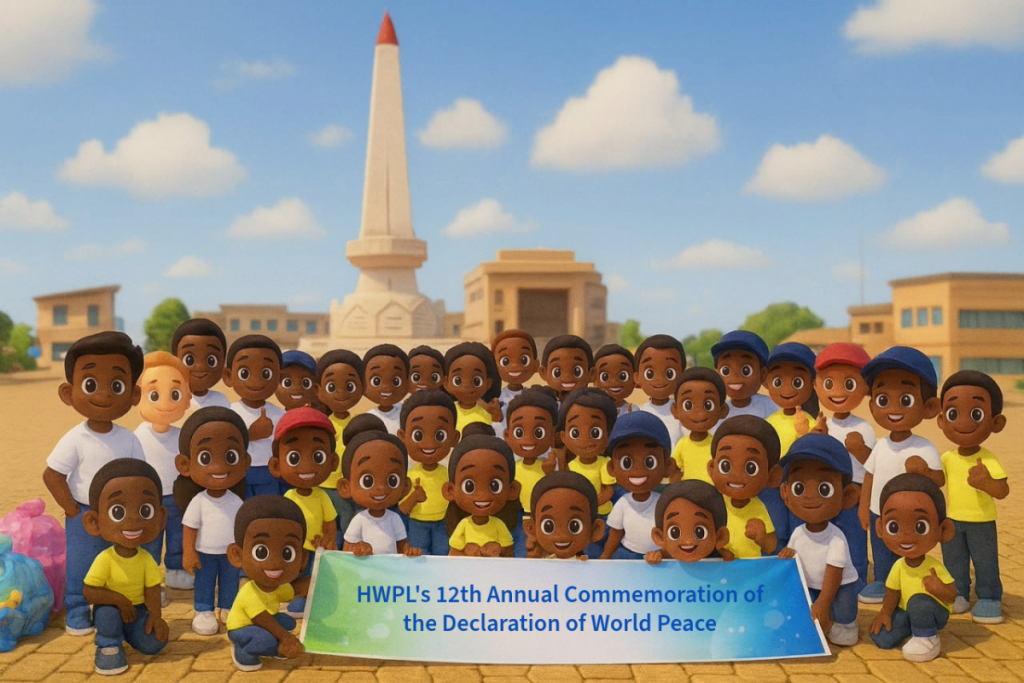
At a major university stadium in Uganda, thousands gathered to celebrate the 12th anniversary of the HWPL World Peace Declaration through a Peace Olympics. Youth, community members, civil society groups, and public officials came together in one space, so the event became more than a ceremony.

Instead, it showed how peace can take shape when people from different backgrounds walk, compete, and cooperate side by side. This shared experience highlighted the power of unity in action. 💡🌱

A STEP TOWARDS PEACE How Peace Takes Shape Worldwide: Education, Youth, Faith, and Global Solidarity 이만희 평화실화 UgandaPeaceOlympics TimorLestePeace ThailandInterfaithPeace MyanmarEarthquakeRecovery Manheelee man hee lee true story of peace GlobalPeaceEducation

The Peace Olympics blended celebration with participation through peace messages, a symbolic peace walk, and friendly sports tournaments. Youth and citizens delivered handwritten letters to leaders, while games and activities encouraged teamwork and mutual respect.

As a result, peace felt practical and visible, not distant or abstract. This approach demonstrated that peace can grow naturally when education, civic engagement, and joyful participation move forward together. 🌟🌍

Interfaith Meditation Opening a Quiet Path to Peace 🌍✨

A STEP TOWARDS PEACE How Peace Takes Shape Worldwide: Education, Youth, Faith, and Global Solidarity 이만희 평화실화 UgandaPeaceOlympics TimorLestePeace ThailandInterfaithPeace MyanmarEarthquakeRecovery Manheelee man hee lee true story of peace GlobalPeaceEducation

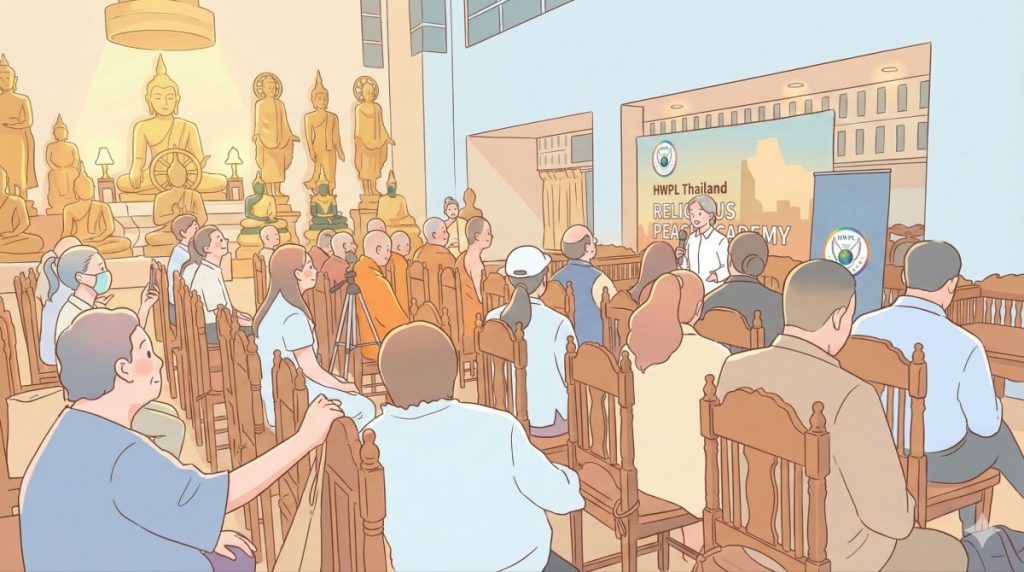
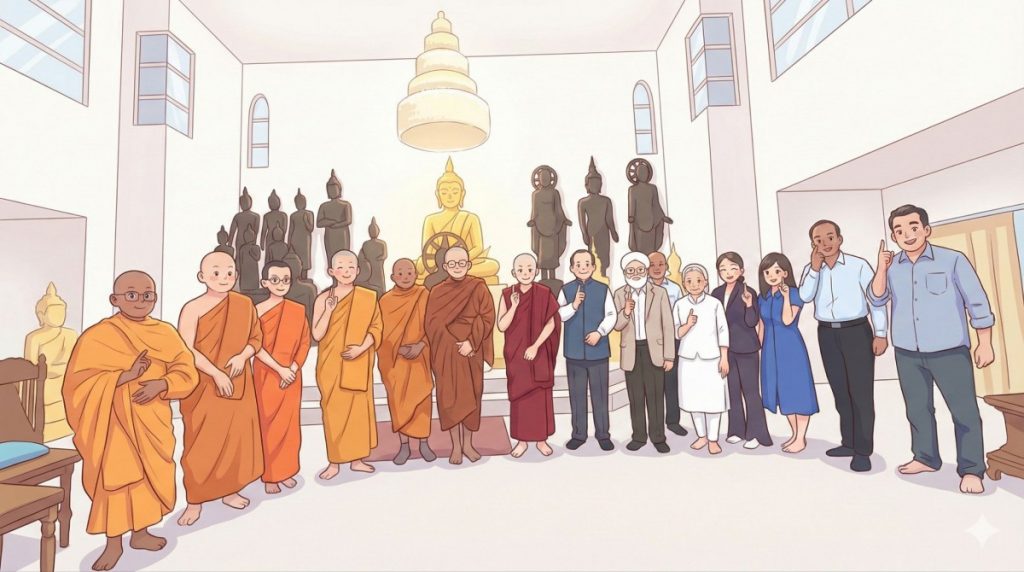
At a temple in Bangkok, an interfaith meditation event offered a calm yet powerful space for peace education. Organized by HWPL, the program brought together religious leaders, students, and local believers from different faith traditions to practice meditation side by side.

A STEP TOWARDS PEACE How Peace Takes Shape Worldwide: Education, Youth, Faith, and Global Solidarity 이만희 평화실화 UgandaPeaceOlympics TimorLestePeace ThailandInterfaithPeace MyanmarEarthquakeRecovery Manheelee man hee lee true story of peace GlobalPeaceEducation

Instead of focusing on lectures, the event emphasized shared experience, allowing participants to learn directly through silence, breathing, and reflection. As a result, understanding grew naturally, without debate or comparison.

This moment showed that peace can begin quietly within the heart, and that inner calm can become a shared language beyond religion, culture, and words. 💡🌱

A Global Prayer Gathering Supporting Earthquake Recovery 🌍✨

A STEP TOWARDS PEACE How Peace Takes Shape Worldwide: Education, Youth, Faith, and Global Solidarity 이만희 평화실화 UgandaPeaceOlympics TimorLestePeace ThailandInterfaithPeace MyanmarEarthquakeRecovery Manheelee man hee lee true story of peace GlobalPeaceEducation

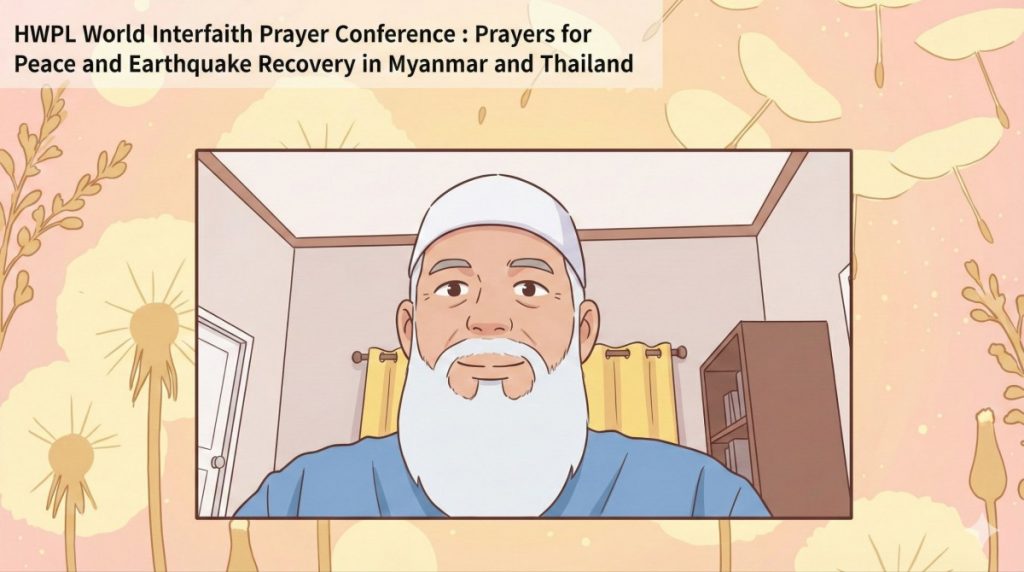
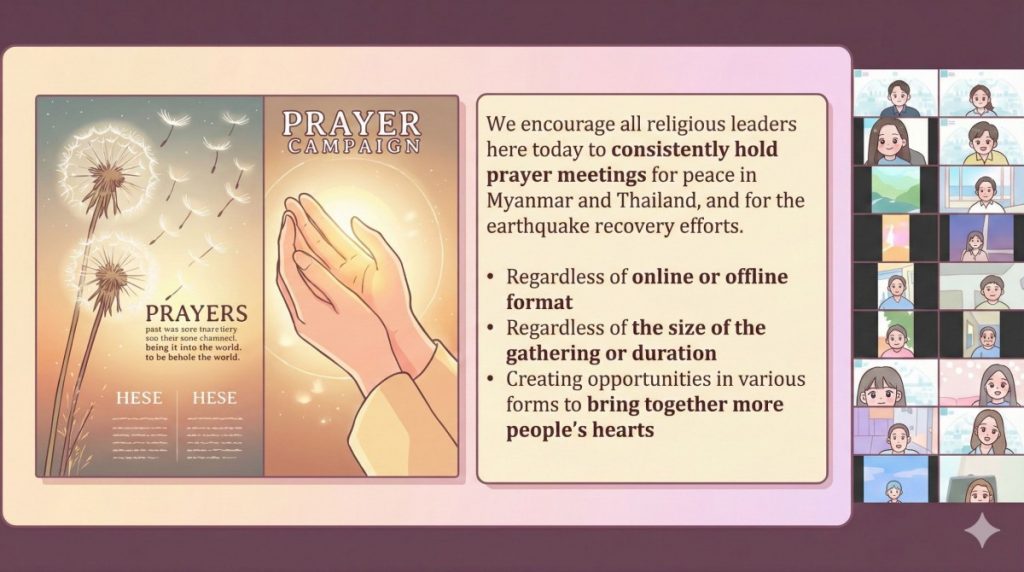
After a powerful earthquake struck parts of Myanmar and Thailand, causing widespread loss and displacement, HWPL organized a global prayer conference to unite support across borders. Religious leaders from more than ten countries joined online, sharing prayers and messages of comfort for affected communities.

A STEP TOWARDS PEACE How Peace Takes Shape Worldwide: Education, Youth, Faith, and Global Solidarity 이만희 평화실화 UgandaPeaceOlympics TimorLestePeace ThailandInterfaithPeace MyanmarEarthquakeRecovery Manheelee man hee lee true story of peace GlobalPeaceEducation

In addition, an online relay prayer campaign invited people worldwide to leave words of hope and peace through a shared platform. Rather than remaining a symbolic event, the gathering became a moment of real connection, showing how compassion can travel beyond distance.

This collective effort reminded participants that even in disaster, unity and care can help communities move toward healing and peace together. 💡🌱❤️

Peace is up to you :0 Good luck!

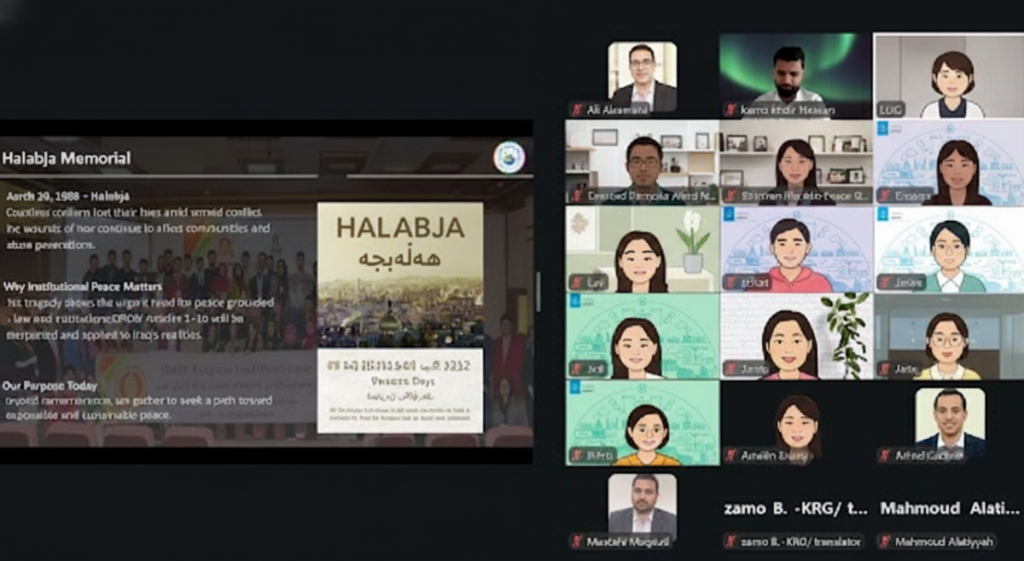
A New Step for Peace in Iraq: HWPL Forms Permanent Reconciliation Committee

📝 Summary
An international online conference led by HWPL marked a new step toward peace in Iraq by launching a permanent committee for reconciliation, grounded in local voices and long-term cooperation.


🔑 Key Highlights

  • A permanent peace and reconciliation committee was officially launched
  • Peace discussions focused on local realities and community trust
  • Civil society, religious leaders, and legal experts joined as equal partners
  • The initiative aims for regionally led, sustainable peace in Iraq
  • Clear next steps include regular meetings and on-site engagement

🌟 Building Peace from Within: A New Chapter for Iraq

A STEP TOWARDS PEACE A New Step for Peace in Iraq: HWPL Forms Permanent Reconciliation Committee regionallyledpeace peaceimplementationiraq middleeastpeaceconference middleeastpeacebuilding Manheelee iraqreconciliationprocess iraqpeaceinitiative hwplpeacecommittee hwplonlineconference

Peace cannot grow when it is imposed from the outside. Instead, it takes root when communities speak, listen, and rebuild trust together 🌍. With this understanding, Heavenly Culture, World Peace, Restoration of Light (HWPL) organized an international online conference that placed Iraqi voices at the center of peacebuilding efforts.

Held in December 2025, the conference brought together former and current public officials, civil society representatives, and experts from across the Middle East. Their shared goal was simple yet powerful: to explore how peace can be implemented in ways that reflect local history, culture, and social realities ✨.


🌟 A Permanent Committee for Peace and Reconciliation

One of the most meaningful outcomes of the conference was the formation of a permanent peace and reconciliation committee in Iraq. This committee is designed as an ongoing platform, not a one-time event 💡.

It brings together representatives from civil society, religious communities, and the legal and administrative sectors. Through regular dialogue, the committee will discuss practical ways to embed a culture of peace in societies that have experienced conflict. As a result, peace becomes a shared responsibility rather than a distant ideal 🌱.


🌟 Learning from History, Choosing a Shared Future

A STEP TOWARDS PEACE A New Step for Peace in Iraq: HWPL Forms Permanent Reconciliation Committee regionallyledpeace peaceimplementationiraq middleeastpeaceconference middleeastpeacebuilding Manheelee iraqreconciliationprocess iraqpeaceinitiative hwplpeacecommittee hwplonlineconference

Iraq has long been home to diverse religions and ethnic groups living side by side. However, painful events from the past, including moments of deep human suffering, remain part of the national memory. These experiences continue to shape conversations around reconciliation and human rights.

Today, Iraq is moving through a careful phase of peacebuilding. In recent years, cooperation among local governments, religious communities, and civil society has slowly expanded. Because of this, the conference focused on local experiences and perspectives, recognizing them as essential foundations for lasting peace ❤️.


🌟 From Dialogue to Action: What Comes Next

Following the conference, HWPL announced clear next steps to turn discussion into action 🌟. Plans include advancing the Middle East Peace Implementation Committee based in Iraq, holding regular online meetings, and organizing working groups around specific peace-related issues.

In addition, an offline event is planned in Iraq in early 2026. This gathering will allow civil society actors, religious leaders, and legal experts to participate directly, strengthening cooperation on the ground 🎉.

Through these steady and practical efforts, HWPL aims to build a step-by-step framework for sustainable peace cooperation—one that grows through trust, partnership, and local leadership.

Peace is not achieved in a single moment. It is built through continuous dialogue, shared standards, and collective responsibility. By placing local communities at the heart of peace efforts, this initiative offers a hopeful path forward for Iraq—and for the wider region 🌍✨.

Source :
HWPL forms permanent committee for peace and reconciliation in Iraq – Upendo News Portal

#PeaceInAction #IraqPeace #HWPL #MiddleEastPeace #CultureOfPeace