- 🌍 In May 2012, The Chairman Lee Man-hee began his first international peace tour in Europe, focusing on world peace and the peaceful reunification of the Korean Peninsula.
- 🕊️ In Germany, he discussed the experience of German reunification with a former East German prime minister and considered possible lessons for Korea.
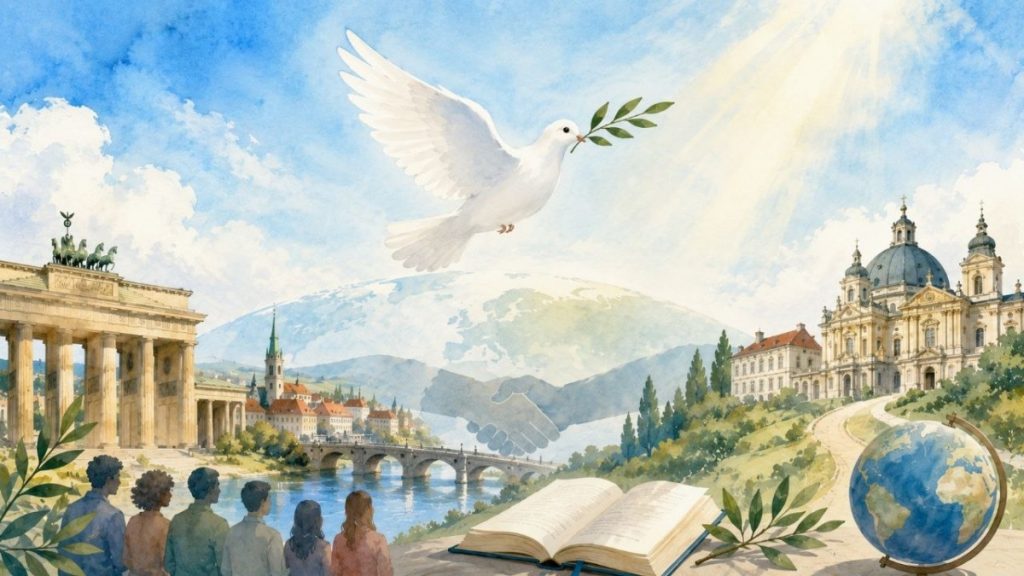
- 🤝 In Austria, he met with a Catholic abbot and engaged in a conversation about the Bible, crossing denominational boundaries.
- 📖 Religious seminars and public gatherings in Germany attracted participants from several countries and received attention from local media.
- 🌏 Looking back from the perspective of peace and human rights, the journey raises broader questions about the role of civilians, religious communities, dialogue, and historical memory in pursuing peace.
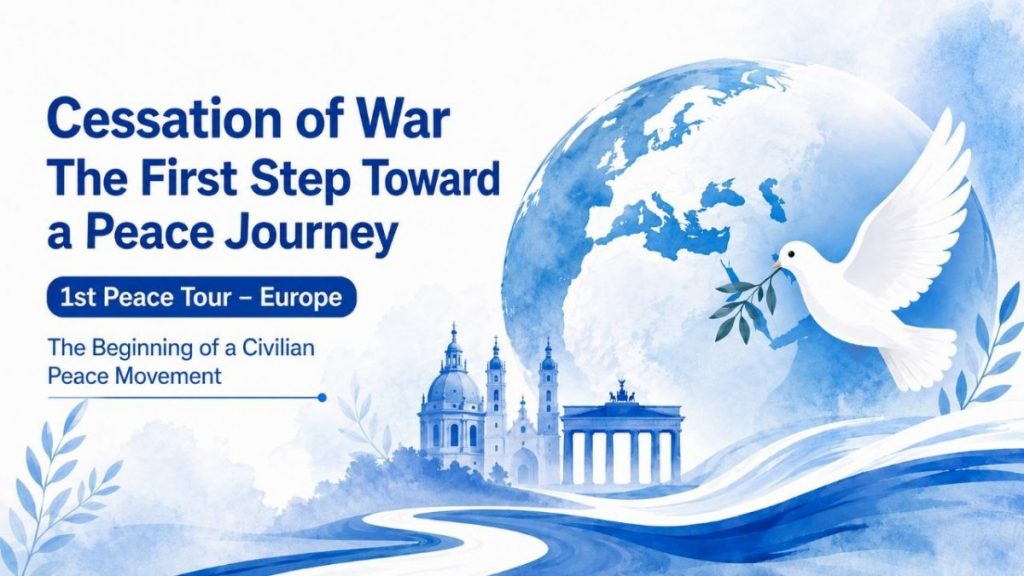
When we talk about peace, we often think first of governments, diplomats, international organizations, and formal peace agreements. 🕊️ Yet peace is also discussed and pursued by individuals, religious communities, and civil society.
In May 2012, The Chairman Lee Man-hee began what became his first international peace tour in Europe. At that time, HWPL had not yet been established, and his early international activities were conducted as a representative of Shincheonji.
Europe was a meaningful starting point. 🇩🇪 The continent had experienced religious conflicts, two world wars, political division, and the separation of Germany into East and West. Yet Germany had also experienced reunification after decades of division.
During this first European journey, The Chairman Lee Man-hee discussed German reunification, the possibility of peaceful reunification on the Korean Peninsula, religious dialogue, and his understanding of the Bible.
For someone interested in peace and human rights, this journey offers an opportunity to consider an important question:
What can individuals and religious communities contribute to peace when political divisions remain deeply entrenched? 🌍
🌍 Learning from German Reunification
One of the most notable events during the 2012 tour was a meeting in Potsdam with a former prime minister of East Germany.
The former East German prime minister had been an important political figure during the final period of East Germany and the process that led to German reunification. During their conversation, The Chairman Man-hee Lee asked about the German experience and discussed the possibility of peaceful reunification on the Korean Peninsula.
🕊️ One point emphasized during the conversation was the importance of peaceful public demonstrations.
According to the former prime minister, the roots of German reunification could be found in peaceful demonstrations by citizens. He explained that his role at the time was largely to help the power of the people spread.
This provides an interesting perspective on reunification.
Political leaders and governments certainly play important roles in major historical changes. However, the German experience also demonstrated that public participation can become an important force for political transformation.
📞 Another aspect discussed was communication between East and West Germany.
Although Germany was politically divided, connections between people had not completely disappeared. People could communicate by telephone, exchange mail, and watch television from the other side.
In other words, the division did not completely eliminate contact between people.
This point is particularly interesting when considering the Korean Peninsula. 🇰🇷 The political and security circumstances of Korea are very different from those of divided Germany, so the German experience cannot simply be copied.
Nevertheless, the conversation highlighted the potential importance of communication, historical memory, public participation, and education when thinking about reunification.
The former East German prime minister also emphasized the importance of helping young Koreans maintain an understanding of reunification.
👥 This is an issue that extends beyond politics. If younger generations gradually lose interest in or knowledge of the history of division, the social meaning of reunification can also change.
For this reason, education and historical awareness can become part of the longer-term conversation about peace.
🤝 A Conversation Across Religious Boundaries
The first European tour was not limited to political and historical discussions.
On May 14, The Chairman Lee Man-hee visited a Catholic monastery in Austria and met with its abbot. ⛪ During their meeting, they had an open conversation about the Bible.
The monastery itself represented a long European religious tradition. The visit also included access to areas of the monastery that were not ordinarily open to visitors, including its chapel and historic library.
📚 The conversation between The Chairman Man-hee Lee and the Catholic abbot centered on their understanding of the Bible and religious beliefs.
From a broader perspective, this encounter illustrates one of the recurring challenges of religious life: how can people from different traditions communicate with one another despite theological differences?
Catholic Christianity and Shincheonji have significant differences in theology and religious interpretation. Therefore, dialogue does not necessarily mean agreement.
But dialogue can still have value. 🤝
People do not have to reach identical conclusions in order to listen to one another. In a world where religious differences can sometimes become sources of tension, creating opportunities for communication may be meaningful in itself.
As someone interested in human rights, I believe this question deserves attention.
🕊️ Religious freedom is not simply about protecting one’s own beliefs. It also involves considering how people with different beliefs can coexist peacefully and respectfully.
The meeting described during the 2012 tour therefore provides an example of a conversation that crossed denominational boundaries, even though the participants came from different religious traditions.
📖 Religious Gatherings and International Interest
Another major part of the first European tour involved religious seminars and public conferences in Germany.
The Chairman Lee Man-hee participated in a conference in Frankfurt on May 7 and later held large gatherings in Berlin on May 11 and 12.
At this stage, before HWPL’s later activities became prominent, his public message was primarily religious and focused on his interpretation of the Bible. According to the article, around 400 religious participants, including religious leaders from 25 countries, attended the Berlin gathering. 🌍
The response from participants was described as enthusiastic.
One local columnist reportedly said that the gathering seemed to address questions she had been seeking answers to. Another religious leader who had come temporarily to Germany from the Democratic Republic of the Congo reportedly made considerable effort to follow the lecture despite the need for interpretation between Korean, German, and another language.
🌐 His reaction was particularly notable because he reportedly expressed a desire for a larger event in the future and invited The Chairman Lee Man-hee to speak at a conference in the Congo.
These accounts show that the gatherings were not limited to a single national audience. Participants from different countries encountered a religious message originating from Korea.
This international dimension is important when thinking about communication.
Ideas about peace, religion, and reconciliation do not exist in isolation. They move between countries through people, conferences, religious communities, media, and personal relationships.
💬 Whether people agree with a particular religious message or not, the ability to communicate across cultural and national boundaries remains an important part of international dialogue.
📰 Media Attention and the Meaning of the Journey Today
The first European tour also attracted attention from several local media outlets.
German media organizations reported on the gatherings and interviewed The Chairman Lee Man-hee. According to the article, Leipzig Fernsehen covered the Berlin gathering and interviewed him, while Rhein-Main TV broadcast an interview connected to the Frankfurt conference.
📺 JeetTV also streamed a gathering online, and a North Berlin weekly newspaper later reported on the Berlin event.
The media coverage is significant because it shows how the activities were presented to a wider public beyond those physically attending the events.
The journey itself took place in 2012, but the themes discussed during it remain relevant today.
🌍 The Korean Peninsula is still divided.
🕊️ Armed conflicts continue in different parts of the world.
🤝 Religious differences remain an important part of many social and political debates.
👥 Younger generations continue to inherit the consequences of historical conflicts they did not personally experience.
From the perspective of a physician interested in peace and human rights, these issues are difficult to separate from the value of human life.
Medicine teaches us to look beyond abstract categories and remember the individual person behind them. War and division similarly affect individuals: families are separated, communities experience loss, and people can carry the consequences of conflict for generations.
For me, this is why discussions about peace deserve to extend beyond political negotiations alone. 🕊️
The story of The Chairman Lee Man-hee’s first European peace tour does not provide a simple solution to the Korean Peninsula’s division. Germany’s history cannot simply be transferred to Korea, and religious dialogue cannot by itself resolve political conflicts.
But the journey does highlight several ideas worth considering:
Communication matters. 💬
Historical memory matters. 📚
Peaceful public participation matters. 👥
Dialogue across religious boundaries matters. 🤝
And the willingness to imagine reconciliation matters. 🕊️
Ultimately, peace is not only about ending a conflict on paper. It is also about creating conditions in which people who have been separated by history can once again communicate, understand one another, and envision a different future.
🌏 Looking back at The Chairman Lee Man-hee’s first peace tour in Europe from this perspective, the journey can be seen as an early chapter in a broader effort to communicate ideas about world peace and Korean reunification across national and religious boundaries.
And perhaps the most important question remains the simplest one:
If peace is something humanity needs, who is responsible for pursuing it?
Governments have a role. International organizations have a role. Religious communities have a role.
And perhaps civilians do, too. 🕊️🌍🤝
Reference: https://www.newscj.com/news/articleView.html?idxno=3425630